


With 48 teams competing across 104 matches in three countries, securing World Cup 2026 tickets has become one of the most competitive ticket purchases in sports.
The FIFA World Cup 2026 tournament kicks off on Thursday, June 11, 2026, and concludes with the final on Sunday, July 19, 2026.
This comprehensive guide explains everything fans need to know about purchasing FIFA World Cup 2026 tickets, from official sales phases and pricing structures to stadium-specific information and verified resale options.
Whether you’re planning to attend matches in the United States, Canada, or Mexico, understanding the ticketing process early maximizes your chances of securing seats at face value.
Table of Contents
Understanding FIFA World Cup 2026 Tickets
World Cup 2026 tickets provide access to matches held across 16 stadiums in North America. The expanded 48-team format means more matches than any previous World Cup, creating both increased availability and unprecedented demand.
FIFA operates the only official ticketing platform for the tournament. All legitimate tickets must be purchased through FIFA’s system or the authorized resale marketplace. Every ticket purchaser needs a FIFA ID—a free account that links to government-issued identification and prevents duplicate purchases.
The tournament structure includes:
- Group stage: 78 matches across all host cities
- Round of 32: 16 matches in selected venues
- Round of 16: 8 matches in major stadiums
- Quarter-finals: 4 matches
- Semi-finals: 2 matches
- Third-place match: 1 match
- Final: 1 match at MetLife Stadium, New Jersey
FIFA reported receiving more than 150 million ticket requests during earlier sales phases—a record that demonstrates the extraordinary demand fans should expect. The random selection draw system exists specifically because demand far exceeds available seats.
Types of Tickets Available
FIFA offers several ticket categories to accommodate different fan preferences:
Individual Match Tickets provide entry to specific games. Fans select the exact match, stadium, and seating category they want. These tickets offer the most flexibility but face the highest competition during sales phases.
Team-Specific Tickets follow a particular national team through the tournament stages. These packages adjust automatically based on match schedules once teams advance. However, if your chosen team is eliminated, your ticket allocation ends.
Venue-Specific Tickets guarantee seats at a particular stadium for multiple matches, regardless of which teams play. This option works well for fans who prioritize location over specific matchups.
Supporter Entry Tickets represent FIFA’s affordability initiative. Priced from 60 US dollars for many matches, including the final, these tickets target local residents and dedicated fans. However, the allocation remains limited, and eligibility requirements apply.
When Do World Cup 2026 Tickets Go On Sale?
FIFA releases tickets through multiple phases rather than a single sale date. This phased approach manages the enormous demand and gives fans several opportunities to purchase.
Sales Phase Timeline
While FIFA has not announced final dates, the typical World Cup ticketing timeline suggests sales will begin approximately 18 to 24 months before the opening match. Based on this pattern, expect initial announcements in late 2024 or early 2025.
The sales phases typically follow this structure:
Phase 1: Random Selection Draw (First Major Sales Window)
This phase opens with a registration period lasting several weeks. Fans submit ticket applications through the FIFA ticketing portal, selecting their preferred matches and seating categories. Applications are not first-come, first-served. Instead, FIFA conducts a random selection draw from all valid applications.
The random selection process ensures fairness when millions of fans compete for limited inventory. FIFA notifies successful applicants via email and provides a deadline to complete payment. Unsuccessful applicants automatically enter future sales phases.
Phase 2: First-Come, First-Served Sales
After the random selection draw concludes, FIFA opens the remaining inventory for direct purchase. These sales operate on a first-come, first-served basis. Available tickets appear in real-time on the FIFA ticketing platform, and fans must act quickly to secure them.
Phase 3: Last-Minute Sales
As the tournament approaches, FIFA releases additional tickets from hospitality returns, team allocations, and reserved inventory. These sales provide final opportunities to purchase tickets at face value, though availability is unpredictable.
How to Prepare for Ticket Sales
Creating your FIFA ID should be your first step. The registration process requires:
- Valid email address
- Full legal name (matching government ID)
- Date of birth
- Residential address
- Mobile phone number
Visit FIFA’s official website to create your account well before sales open. This preparation prevents technical issues or delays when ticket windows open.
Enable notifications through the FIFA ticketing app and subscribe to official FIFA email updates. These channels provide the earliest alerts about sales phases, dates, and available inventory.
How to Buy FIFA World Cup 2026 Tickets
The official purchasing process follows strict procedures designed to prevent fraud and ensure fair distribution.
Step 1: Access the Official FIFA Ticketing Platform
Navigate to FIFA’s official ticketing website. Bookmark this page and verify the URL to avoid phishing sites that mimic the official portal. Never enter personal information or payment details on unofficial websites claiming to sell World Cup tickets.
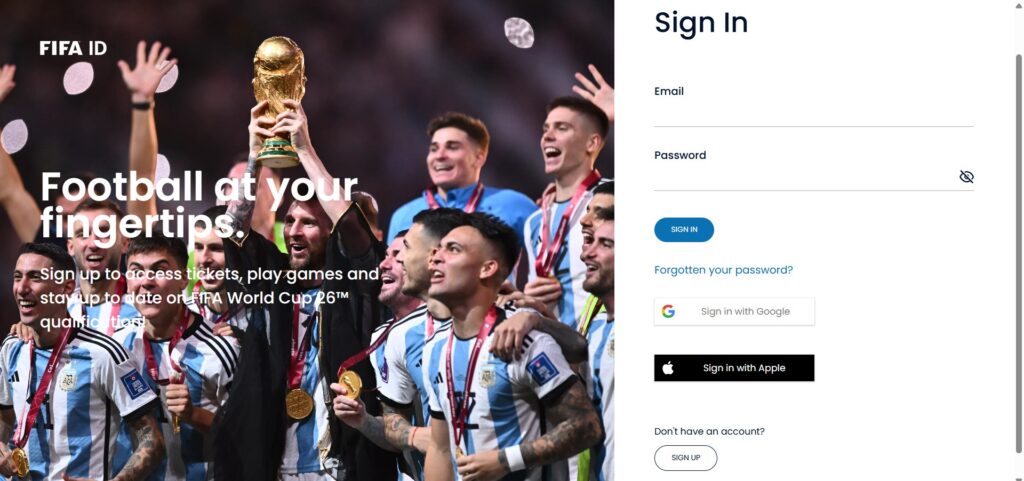
Step 2: Log In with Your FIFA ID
Enter your FIFA ID credentials. The system will verify your identity against the information you provided during registration. If you encounter login issues, use the password recovery function before sales begin—customer service becomes overwhelmed during active sales periods.
Step 3: Select Your Tickets
The ticketing platform displays available matches organized by date, stage, and venue. Each match listing shows:
- Competing teams (or “Winner of Match X” for knockout rounds)
- Date and kickoff time
- Stadium name and city
- Available seating categories
- Price per ticket
You can add multiple match selections to your cart. The system holds your selections for a limited time—typically 15 to 30 minutes—while you complete the purchase process.
Step 4: Choose Seating Categories
Each stadium offers multiple seating categories, typically ranging from Category 4 (most affordable, farthest from the field) to Category 1 (premium, closest to the action). Prices vary significantly based on category and match importance.
Review the stadium seating chart before making your selection. The visual representation shows the approximate location of each category, helping you understand sightlines and distance from the field.
Step 5: Complete Payment
FIFA accepts major credit cards and digital payment methods. The platform processes transactions in US dollars, but your bank may apply currency conversion fees for international purchases.
Payment must be completed within the allocated time window. If your payment fails or times out, the tickets return to available inventory, and you must restart the selection process.
Step 6: Receive Confirmation and Digital Tickets
After successful payment, FIFA sends a confirmation email to your registered address. This email includes:
- Order reference number
- Match details
- Ticket quantity and seating information
- Instructions for accessing digital tickets
Digital tickets appear in the official FIFA ticketing app as the tournament approaches. Physical tickets are not issued for World Cup 2026. You must present your digital ticket on a mobile device for stadium entry.
Important Purchase Restrictions
FIFA enforces several restrictions to maintain fair distribution:
- Maximum purchase limits per FIFA ID (typically 4-7 tickets per match)
- Geographic restrictions for certain ticket categories
- Age verification requirements for matches featuring alcohol sales
- Accessible seating requests require documentation
Attempting to circumvent these restrictions may result in order cancellation without refund.
Below is a concise, step-by-step guide you can follow now to create a FIFA ID, plus troubleshooting, important rules, and security tips.
How to register for a FIFA ID
- Open your browser and go to: fifa.com/tickets.
- Click the person icon (top right).
- Click “SIGN UP” (or Create account).
- Enter the requested personal details:
- Full name (as on your ID)
- Email address (unique — one FIFA ID per email)
- Date of birth (you must be at least 13 to register)
- Country of residence
- Choose a strong password and confirm it. (Use a mix of letters, numbers, symbols; avoid reused passwords.)
- Read and agree to the Terms of Service / Privacy Policy, then submit.
- Check your email for the verification message and click the link to verify your account. After verification, you can sign in with your FIFA ID.
Important rules & notes
- You must be ≥13 years to register a FIFA ID. You must be ≥18 years to sign up for a FIFA ticketing account and purchase World Cup tickets.
- One email = one FIFA ID. You cannot create multiple FIFA IDs with the same email.
- The email on a FIFA ID cannot be changed after registration (for security reasons). Choose an email you control long-term.
- The FIFA ID is required to apply for, buy, manage, or transfer World Cup tickets and to use FIFA ticketing services.
Troubleshooting — didn’t receive the verification email
- Check your spam/junk and promotions folders.
- Ensure your mail settings allow messages from @fifa.com.
- On the FIFA site, go to the Sign-In page and request a new verification email (there is usually a “resend verification” option).
- If you still don’t get it, try:
- Resending from a desktop browser (or incognito/private mode).
- Clearing browser cache or trying another browser/device.
- Confirm you entered your email correctly (no typos).
- If none of the above works, contact FIFA ticket support via their help article/contact form.
Security & practical tips
- Use a unique, strong password and store it in a password manager.
- If FIFA offers two-factor authentication (2FA), enable it.
- Don’t buy tickets from anyone who asks you to change your FIFA ID email or forward verification links. That’s a common scam.
- Keep your FIFA ID details (name, DOB) consistent with your government ID—stadia often require matching ID for entry.
FIFA World Cup 2026 Ticket Prices
Ticket pricing for World Cup 2026 reflects several factors: match stage, stadium location, seating category, and the introduction of dynamic pricing elements.
Official Pricing Structure
FIFA introduced the Supporter Entry tier starting at 60 US dollars for eligible fans. This category represents the most affordable option and applies across numerous matches, including high-demand games. However, allocation for Supporter Entry tickets remains strictly limited.
Standard category pricing follows this general framework:
| Match Stage | Category 4 | Category 3 | Category 2 | Category 1 |
|---|---|---|---|---|
| Group Stage | $60-$110 | $120-$160 | $180-$240 | $280-$400 |
| Round of 32 | $90-$140 | $160-$210 | $260-$340 | $400-$550 |
| Round of 16 | $120-$180 | $220-$280 | $350-$450 | $550-$750 |
| Quarter-Finals | $180-$260 | $320-$420 | $520-$680 | $850-$1,150 |
| Semi-Finals | $280-$400 | $550-$700 | $900-$1,200 | $1,400-$1,900 |
| Third Place | $220-$320 | $420-$550 | $680-$900 | $1,100-$1,500 |
| Final | $400-$600 | $800-$1,100 | $1,400-$1,900 | $2,200-$3,000+ |
Note: These ranges represent estimates based on FIFA’s announced pricing tiers and historical World Cup ticket costs. Final prices may vary by specific stadium and match.
Dynamic Pricing Considerations
FIFA confirmed that dynamic pricing will influence certain matches. Unlike traditional fixed pricing, dynamic models adjust costs based on real-time demand factors:
- Team popularity and rankings
- Geographic proximity of competing nations
- Historical rivalries
- Remaining inventory levels
This approach means two group-stage matches at the same venue might have different price points. Matches featuring highly ranked teams or traditional football powers will command premium pricing even in early rounds.
Understanding the Final Match Premium
The World Cup 2026 final takes place at MetLife Stadium in East Rutherford, New Jersey, on Sunday, July 19, 2026. Final match tickets represent the most expensive category across the entire tournament.
Historical data shows final tickets cost 5 to 8 times more than typical group-stage matches. The combination of limited seating (approximately 82,500 capacity), global demand, and once-in-a-lifetime significance drives this premium.
Fans targeting the final should budget accordingly:
- Supporter Entry: Approximately $400-$600
- Category 4: $600-$900
- Category 3: $1,100-$1,500
- Category 2: $1,900-$2,600
- Category 1: $3,000-$5,000+
These estimates reflect face-value pricing through FIFA. Secondary market prices typically exceed these amounts significantly.
Budget Planning for Multiple Matches
Many international fans plan to attend several matches across different host cities. Here’s a realistic budget breakdown for a fan attending three group-stage matches and one knockout match:
Ticket Costs (Category 3 seating):
- Group Match 1: $160
- Group Match 2: $160
- Group Match 3: $160
- Round of 16: $280
- Total Tickets: $760
Associated Travel Costs:
- International flights: $800-$1,500
- Domestic flights between host cities: $400-$800
- Accommodation (8 nights): $1,200-$2,400
- Meals and local transport: $600-$1,000
- Total Travel: $3,000-$5,700
Overall Budget: $3,760-$6,460 for a multi-city World Cup experience
This calculation demonstrates why planning and budgeting well in advance proves essential for international supporters.
World Cup 2026 Tickets by Stadium and Host City
The tournament spans 16 venues across three countries. Each World Cup 2026 stadium offers unique capacity, accessibility, and local characteristics that influence ticket availability and experience.
United States Stadiums
MetLife Stadium – East Rutherford, New Jersey
Capacity: 82,500
Matches: Group stage through final
MetLife Stadium hosts the World Cup 2026 final on Sunday, July 19, 2026. As the tournament’s centerpiece venue, it will also host multiple knockout matches. Located in the New York metropolitan area, the stadium offers excellent public transportation access via New Jersey Transit trains and buses.
Ticket demand for MetLife Stadium will exceed any other venue due to the final match allocation. Even group-stage matches at this location face intense competition.
SoFi Stadium – Inglewood, California
Capacity: 70,000
Matches: Group stage through semi-finals
SoFi Stadium represents one of the world’s most technologically advanced venues. Opened in 2020, it features a translucent roof and the massive Oculus video board. Located near the Los Angeles International Airport, the stadium serves the nation’s second-largest metropolitan area.
Parking at SoFi Stadium is limited and requires advance reservations. Public transportation options include the Metro C Line to Hawthorne/Lennox Station, followed by shuttle service on match days.
AT&T Stadium – Arlington, Texas
Capacity: 80,000
Matches: Group stage through semi-finals
AT&T Stadium’s retractable roof and massive video displays create an impressive atmosphere. Located between Dallas and Fort Worth, the venue sits in the heart of the Dallas-Fort Worth metroplex.
The stadium is primarily accessible by car, though match-day shuttle services operate from central locations. Hotel options range from Arlington properties to accommodations throughout the broader metropolitan area.
Mercedes-Benz Stadium – Atlanta, Georgia
Capacity: 71,000
Matches: Group stage through quarter-finals
Mercedes-Benz Stadium features a retractable roof and strong public transportation connections via MARTA rail service. Located in downtown Atlanta, the venue offers walking access to numerous hotels and restaurants.
Atlanta serves as a major airline hub, making it accessible for fans traveling from across North America and internationally.
Levi’s Stadium – Santa Clara, California
Capacity: 68,500
Matches: Group stage through quarter-finals
Levi’s Stadium sits in the San Francisco Bay Area, approximately 40 miles south of San Francisco. The venue offers VTA light rail access and parking options, though both fill quickly on match days.
Bay Area fans benefit from two tournament venues—Levi’s Stadium and SoFi Stadium—providing multiple opportunities to attend matches in California.
Gillette Stadium – Foxborough, Massachusetts
Capacity: 65,000
Matches: Group stage through round of 16
Gillette Stadium serves the New England region, located approximately 22 miles southwest of Boston. The venue requires automobile access, with limited commuter rail service on match days.
Accommodation options span from Foxborough to Boston proper, with Boston offering more variety but requiring additional travel time.
Arrowhead Stadium – Kansas City, Missouri
Capacity: 76,000
Matches: Group stage through round of 16
Arrowhead Stadium brings World Cup football to America’s heartland. Known for its passionate fanbase and impressive noise levels, the venue offers an authentic American sports atmosphere.
Kansas City International Airport provides direct service from major cities, and the stadium is located approximately 10 miles from downtown Kansas City.
Hard Rock Stadium – Miami Gardens, Florida
Capacity: 65,000
Matches: Group stage through quarter-finals
Hard Rock Stadium’s tropical climate and Miami’s international atmosphere create a unique World Cup experience. The venue underwent significant renovations and features a partial canopy for weather protection.
Miami International Airport ranks among the busiest in the United States, with extensive international connections. The stadium is accessible by car and has limited public transit options.
Lincoln Financial Field – Philadelphia, Pennsylvania
Capacity: 69,000
Matches: Group stage through round of 16
Lincoln Financial Field serves the Philadelphia metropolitan area and broader Mid-Atlantic region. The venue offers SEPTA subway access and is walkable from South Philadelphia neighborhoods.
Philadelphia’s central East Coast location makes it accessible for fans throughout the northeastern United States.
NRG Stadium – Houston, Texas
Capacity: 72,000
Matches: Group stage through round of 16
NRG Stadium features a retractable roof, ensuring comfort regardless of Houston’s summer weather. The venue is located within Houston’s museum district.
Houston’s international business connections bring diverse populations, likely resulting in strong support for multiple national teams.
Lumen Field – Seattle, Washington
Capacity: 68,740
Matches: Group stage through round of 16
Lumen Field is known for its passionate supporters and excellent acoustics. Located in downtown Seattle, the venue offers easy light rail access from Seattle-Tacoma International Airport.
The Pacific Northwest’s soccer culture ensures enthusiastic local support for World Cup matches.
Canada Stadiums
BC Place – Vancouver, British Columbia
Capacity: 54,500
Matches: Group stage through round of 16
BC Place brings World Cup football to Canada’s west coast. The retractable-roof stadium sits in downtown Vancouver, accessible via SkyTrain and bus services.
Vancouver requires passport documentation for fans traveling from the United States, and customs processing should be factored into travel plans.
BMO Field – Toronto, Ontario
Capacity: 45,500 (expandable to 50,000+)
Matches: Group stage through round of 32
BMO Field represents Canada’s soccer heartland. Toronto’s diverse international population creates one of North America’s most cosmopolitan World Cup experiences.
Toronto Pearson International Airport serves as Canada’s busiest airport, with connections worldwide. The stadium is accessible via TTC streetcar and bus services.
Mexico Stadiums
Estadio Azteca – Mexico City
Capacity: 87,000
Matches: Group stage through semi-finals
Estadio Azteca makes history by hosting matches in its third World Cup (1970, 1986, 2026). The legendary venue witnessed Diego Maradona’s “Hand of God” goal and Pelé’s brilliance.
Mexico City’s altitude (7,350 feet) affects match play and may impact visitors unaccustomed to high elevations. The Azteca is accessible via Mexico City Metro Line 2 to Taxqueña station.
Estadio BBVA – Monterrey, Nuevo León
Capacity: 53,500
Matches: Group stage through round of 16
Estadio BBVA opened in 2015 and represents modern Mexican stadium design. Located in Monterrey, Mexico’s third-largest city, the venue offers a passionate football atmosphere.
Monterrey International Airport provides connections from major North American cities. The stadium requires automobile access primarily.
Estadio Akron – Guadalajara, Jalisco
Capacity: 48,000
Matches: Group stage through round of 16
Estadio Akron serves Guadalajara, Mexico’s second-largest metropolitan area. The venue opened in 2010 and features modern amenities.
Guadalajara’s rich football tradition and large population ensure strong local support for World Cup matches.
Stadium Selection Strategy for Ticket Purchases
When applying for tickets, consider these factors:
Accessibility: Stadiums with strong public transportation connections (Mercedes-Benz, Lumen Field, MetLife) reduce travel stress and parking costs.
Capacity: Larger venues (MetLife, AT&T, Estadio Azteca) offer more total tickets but still face intense competition for premium matches.
Geographic Clustering: Planning to attend multiple matches? Select stadiums within reasonable travel distances. For example: MetLife and Lincoln Financial Field (95 miles apart) or SoFi and Levi’s Stadium (350 miles apart).
Climate Considerations: June and July bring varying weather conditions across host cities. Indoor/retractable roof stadiums (AT&T, Mercedes-Benz, NRG) guarantee climate control.
Official FIFA Resale Marketplace and Ticket Safety
The FIFA Resale and Exchange Marketplace provides the only authorized platform for secondary ticket transactions. Understanding this system protects fans from fraud while providing legitimate options for buying or selling World Cup 2026 tickets.
How the Official Resale Marketplace Works
Fans who can no longer attend matches can list their tickets through FIFA’s platform. The system operates similarly to primary sales:
- Listing Tickets: Sellers access their FIFA account, select the tickets they wish to sell, and submit them to the marketplace. Tickets become unavailable for the seller once listed.
- Pricing Regulations: FIFA establishes maximum resale prices tied to the original ticket face value. This prevents extreme price gouging while allowing minor markups to cover transaction fees.
- Buyer Protection: Purchasers receive the same digital ticket security and transfer process used for primary sales. The FIFA system validates and transfers ownership.
- Seller Payment: After successful resale, FIFA processes payment to the original ticket holder, minus service fees.
Timeline for Resale Availability
The official resale marketplace typically opens several months before the tournament begins. FIFA announces specific dates through official channels.
Resale inventory increases as the tournament approaches when fans finalize travel plans, encounter schedule conflicts, or when teams are eliminated, and team-specific ticket holders release unused allocations.
Avoiding Ticket Scams
Unauthorized ticket sellers pose significant risks during World Cup periods. Common scam indicators include:
Red Flag 1: Requests for Payment Outside Official Platforms
Legitimate sellers only transact through FIFA’s resale marketplace. Anyone requesting direct payment via wire transfer, cryptocurrency, peer-to-peer payment apps, or cash operates outside official channels.
Red Flag 2: Social Media and Classified Advertisement Sellers
Posts on Facebook, Instagram, Craigslist, or similar platforms claiming to sell World Cup tickets are almost always fraudulent. FIFA prohibits ticket transfers outside its official system.
Red Flag 3: Prices Significantly Below Market Value
If a deal seems too good to be true, it is. Scammers use below-market pricing to attract desperate buyers. Remember that high-demand matches maintain strong pricing even through official channels.
Red Flag 4: Pressure Tactics and Urgency
Fraudsters create artificial urgency (“only available for the next hour,” “another buyer is interested”). Legitimate resale transactions through FIFA’s platform don’t require immediate decisions.
Red Flag 5: Screenshots Instead of Official Transfers
A screenshot of a ticket, confirmation email, or barcode proves nothing. These images can be duplicated and sold to multiple buyers. Only tickets transferred through FIFA’s digital system are valid.
What to Do If You’re Scammed
If you fall victim to a ticket scam:
- Report to Local Authorities: File a police report with local law enforcement and provide all communication records with the seller.
- Contact Your Financial Institution: If payment was made via credit card or bank transfer, dispute the charge immediately. Some financial institutions offer fraud protection.
- Report to FIFA: Notify FIFA through their official support channels. While they cannot recover lost funds, reports help identify fraud patterns.
- Document Everything: Save all messages, emails, payment confirmations, and advertisements. This documentation supports police investigations and financial disputes.
Safe Buying Checklist
Before purchasing any World Cup 2026 tickets:
✓ Verify the seller operates through FIFA’s official resale marketplace
✓ Confirm the transaction occurs within the FIFA ticketing platform
✓ Ensure payment processing uses FIFA’s secure payment gateway
✓ Receive official confirmation email from FIFA, not the seller
✓ Verify digital tickets appear in your official FIFA ticketing app
✓ Confirm ticket transfer shows in your FIFA account dashboard
✓ Review the stadium, seat location, and match details before finalizing purchase
Following these steps eliminates the majority of fraud risks.
Travel and Match Day Planning
Securing tickets represents just the first step. Successfully attending World Cup matches requires comprehensive travel and logistics planning.
International Travel Documentation
Passport Requirements: All visitors to the United States, Canada, and Mexico need valid passports. Ensure your passport remains valid for at least six months beyond your planned departure date.
Visa Requirements: Visa policies vary by nationality:
- United States: Many countries participate in the Visa Waiver Program (VWP), allowing tourism visits up to 90 days without a visa. Citizens of non-VWP countries must apply for a B-2 tourist visa.
- Canada: Most visitors need either a visitor visa or an Electronic Travel Authorization (eTA). Check Immigration, Refugees and Citizenship Canada (IRCC) for your country’s requirements.
- Mexico: Citizens of many countries can enter Mexico without a visa for tourism purposes. Verify requirements with the Mexican consulate for your nationality.
ESTA for the United States: VWP citizens must apply for the Electronic System for Travel Authorization (ESTA) at least 72 hours before travel. The application costs 21 US dollars, and approval typically occurs within minutes.
Crossing International Borders
Fans attending matches in multiple host countries must plan for border crossings:
United States to Canada: Major crossing points include:
- Peace Arch (Washington to British Columbia)
- Rainbow Bridge (New York to Ontario)
- Ambassador Bridge (Michigan to Ontario)
Wait times vary significantly. Summer travel and major events cause delays. Consider crossing during off-peak hours (early morning or late evening).
United States to Mexico: Primary crossings include:
- San Ysidro (California to Tijuana)
- El Paso (Texas to Ciudad Juárez)
- Brownsville (Texas to Matamoros)
Southbound crossings into Mexico typically move quickly. Northbound returns to the United States require more time for customs and immigration processing.
Flying vs. Driving: For matches in different countries, flying often proves more time-efficient despite higher costs. Factor in border crossing wait times, hotel costs for overnight travel, and vehicle rental fees when comparing options.
Domestic Travel Between Host Cities
The tournament’s geographic spread necessitates significant travel between venues:
East Coast Corridor: MetLife Stadium, Lincoln Financial Field, and Gillette Stadium form a relatively compact cluster. Ground transportation via Amtrak train service or buses provides cost-effective options.
Texas Triangle: AT&T Stadium (Dallas-Fort Worth), NRG Stadium (Houston), and Mexican venues are accessible via short flights or lengthy drives.
West Coast: SoFi Stadium and Levi’s Stadium sit approximately 350 miles apart—roughly a 5.5-hour drive or a 1.5-hour flight.
Central to Coast: Traveling from Arrowhead Stadium (Kansas City) to either coast requires flights for time efficiency.
Accommodation Strategies
Hotel pricing surges during the World Cup. Booking early provides better rates and availability.
Primary Recommendations:
- Book accommodations immediately after securing tickets
- Consider hotels near public transportation rather than stadiums
- Explore apartment rentals through platforms like Airbnb for multi-night stays
- Join loyalty programs for hotel chains to access member rates
- Check for hotel packages that include match tickets (through official FIFA partners only)
Budget Alternatives:
- University dormitories sometimes offer summer housing
- Hostels provide affordable options for younger travelers
- Camping facilities near certain stadiums
- Staying in suburban areas with rental cars
Match Day Entry Requirements
Entry to World Cup stadiums requires:
- Digital Ticket: Displayed through the official FIFA ticketing app on your smartphone. Ensure your phone is charged and the app functions properly before traveling to the stadium.
- Government-Issued Photo ID: Must match the name on your FIFA ID and ticket. Accepted forms include a passport, a driver’s license (for domestic attendees), or a national ID card.
- Clear Bag: Most stadiums enforce clear bag policies. Permitted bags typically measure 12″ x 6″ x 12″ or smaller and must be transparent.
- No Prohibited Items: Weapons, outside food and beverages, large bags, professional cameras, selfie sticks, laser pointers, noisemakers (except approved inflatable items), and flags with poles are typically prohibited.
Security Screening
Plan to arrive at stadiums at least two hours before kickoff. Security screening involves:
- Walk-through metal detectors
- Bag inspection
- Ticket and ID verification
- Possible additional screening if metal detector alarms
Peak arrival times (60-90 minutes before kickoff) create the longest lines. Arriving earlier provides time to explore the stadium, purchase concessions, and settle into your seats before the match starts.
Accessibility Services
Stadiums provide services for fans with disabilities:
- Accessible Seating: Request accessible seating during ticket purchase through FIFA’s platform. These seats accommodate wheelchairs and provide companion seating.
- Assistive Listening Devices: Available at guest services desks for fans with hearing impairments.
- Accessible Parking: Requires advance reservation and valid disability parking permits.
- Service Animals: Permitted with proper documentation.
Contact individual stadiums directly for specific accessibility information and to arrange necessary accommodations.
FIFA World Cup 2026 Tickets Frequently Asked Questions
When do FIFA World Cup 2026 tickets go on sale?
FIFA has not announced official sale dates. Based on historical patterns, the first sales phase typically begins 18 to 24 months before the tournament’s opening match. The World Cup 2026 kicks off on Thursday, June 11, 2026, suggesting initial ticket sales in late 2024 or early 2025. Monitor FIFA’s official website and social media channels for announcements.
How much will World Cup 2026 tickets cost?
Ticket prices vary significantly based on match stage, stadium, and seating category. FIFA introduced Supporter Entry tickets starting at 60 US dollars for eligible fans. Standard category tickets range from approximately 110 US dollars for group-stage matches in Category 4 seating to over 3,000 US dollars for final match Category 1 seats. Knockout round matches cost more than group-stage games.
Where can I safely buy tickets for the World Cup 2026?
Only purchase tickets through FIFA’s official ticketing platform or the authorized FIFA Resale and Exchange Marketplace. All tickets require a FIFA ID for purchase and transfer. Avoid third-party sellers, social media listings, and classified advertisements—these sources frequently involve fraud. FIFA provides the only guaranteed legitimate ticketing channel.
Can I resell my World Cup 2026 tickets if I can’t attend?
Yes. FIFA operates an official Resale and Exchange Marketplace specifically for this purpose. Log in to your FIFA account, select the tickets you wish to sell, and submit them to the marketplace. FIFA regulates maximum resale prices to prevent extreme markups. Attempting to sell tickets outside FIFA’s official platform violates terms and conditions and may result in ticket cancellation.
Are World Cup 2026 tickets digital or physical?
FIFA issues all World Cup 2026 tickets digitally through the official FIFA ticketing mobile app. Physical tickets are not available. You must present your digital ticket on a smartphone or tablet for stadium entry. Ensure your device is charged and the app functions properly before traveling to matches.
Do I need a FIFA ID to buy tickets?
Yes. A FIFA ID is mandatory for purchasing, managing, and transferring World Cup tickets. Create your account at FIFA’s official website before ticket sales begin. Registration requires your full legal name, date of birth, email address, and residential address. Each person may maintain only one FIFA ID.
How does the random selection draw work?
During the random selection sales phase, fans submit ticket applications for preferred matches and seating categories. Applications remain open for several weeks. After the application period closes, FIFA conducts a computerized random draw from all valid submissions. Selected applicants receive email notification and have a limited time (typically 48-72 hours) to complete payment. This system ensures fairness when demand exceeds supply.
What happens if my ticket application isn’t selected in the lottery?
Unsuccessful applicants automatically roll forward into subsequent sales phases. You don’t need to reapply. FIFA conducts multiple sales phases leading up to the tournament, providing numerous opportunities to purchase tickets. Additional phases typically operate on a first-come, first-served basis rather than random selection.
Can I choose specific seats within a category?
No. FIFA assigns specific seats within your selected category. You can choose the seating category (Category 1, 2, 3, or 4), but you cannot select the exact row and seat number. Seat assignments appear in your FIFA account after purchase.
Are there age restrictions for attending matches?
Children under two years old do not require tickets if sitting on an adult’s lap. All attendees two years and older need their own ticket. Some stadiums restrict alcohol sales to adults only, requiring age verification at concessions. Verify specific stadium policies for family sections and age-related amenities.
What is the refund policy for World Cup tickets?
FIFA’s standard terms prohibit refunds for purchased tickets. Exceptions apply in specific circumstances, such as match cancellation or significant schedule changes. If you cannot attend, use the official resale marketplace to sell your tickets to other fans rather than losing your investment entirely.
Can I transfer my tickets to friends or family?
Yes. The FIFA ticketing platform allows ticket transfers to other registered FIFA ID holders. Both parties must have valid FIFA IDs, and the transfer must occur through the official platform. The receiving party’s name and ID must match for stadium entry. Transfers typically become available after initial ticket purchases are finalized.
Final Recommendations for Securing World Cup 2026 Tickets
Success in obtaining World Cup tickets requires preparation, persistence, and patience. FIFA’s phased approach provides multiple opportunities, but high demand means not every application succeeds on the first attempt.
Create your FIFA ID immediately. Don’t wait for sales announcements. The registration process takes only minutes, but technical issues during high-volume periods cause delays and missed opportunities.
Subscribe to official FIFA notifications. Enable email, SMS, and app notifications through FIFA’s official channels. Third-party websites and social media accounts may provide information, but official FIFA communications arrive first and most reliably.
Plan your budget comprehensively. Ticket costs represent only one expense component. Factor in international flights, domestic travel between host cities, accommodation, meals, ground transportation, and incidentals. Realistic budgeting prevents financial stress and enhances your World Cup experience.
Apply for multiple matches during lottery phases. Increasing your application quantity improves selection odds. However, be prepared to purchase all tickets if selected. Applying for matches you don’t want wastes limited inventory and denies access to other fans.
Consider less popular matches strategically. Group-stage matches featuring traditional football powers sell out immediately. Matches involving smaller nations or venues in less central locations face lower competition. These games often provide excellent football and an authentic World Cup atmosphere at better price points and with improved availability.
Never purchase tickets outside FIFA’s official channels. The money saved through unofficial sellers isn’t worth the risk of fraud, invalid tickets, or stadium entry denial. Paying face value through FIFA guarantees legitimate access.
Monitor the resale marketplace. Even if initial sales phases don’t yield tickets, the official resale marketplace opens closer to the tournament. As travel plans change and teams are eliminated, additional inventory becomes available.
Plan travel logistics before finalizing ticket purchases. Verify that flights, hotels, and ground transportation are available and affordable for your selected matches. Holding tickets to matches you can’t realistically attend benefits no one.
Prepare for disappointment, but maintain persistence. Millions of fans compete for limited tickets. Many applicants face rejection in early phases. Additional sales phases, resale opportunities, and last-minute releases provide second chances. Continue monitoring official channels throughout the months leading up to June 2026.
The FIFA World Cup 2026 represents a historic tournament—the first jointly hosted by three nations and the first expanded to 48 teams. The memories created from attending matches in person last lifetime. With proper preparation, realistic expectations, and adherence to official channels, fans can successfully navigate the ticketing process and experience football’s greatest tournament firsthand.
Stay informed through FIFA’s official website, protect yourself from fraud, plan comprehensively, and embrace the journey. The World Cup 2026 awaits.


