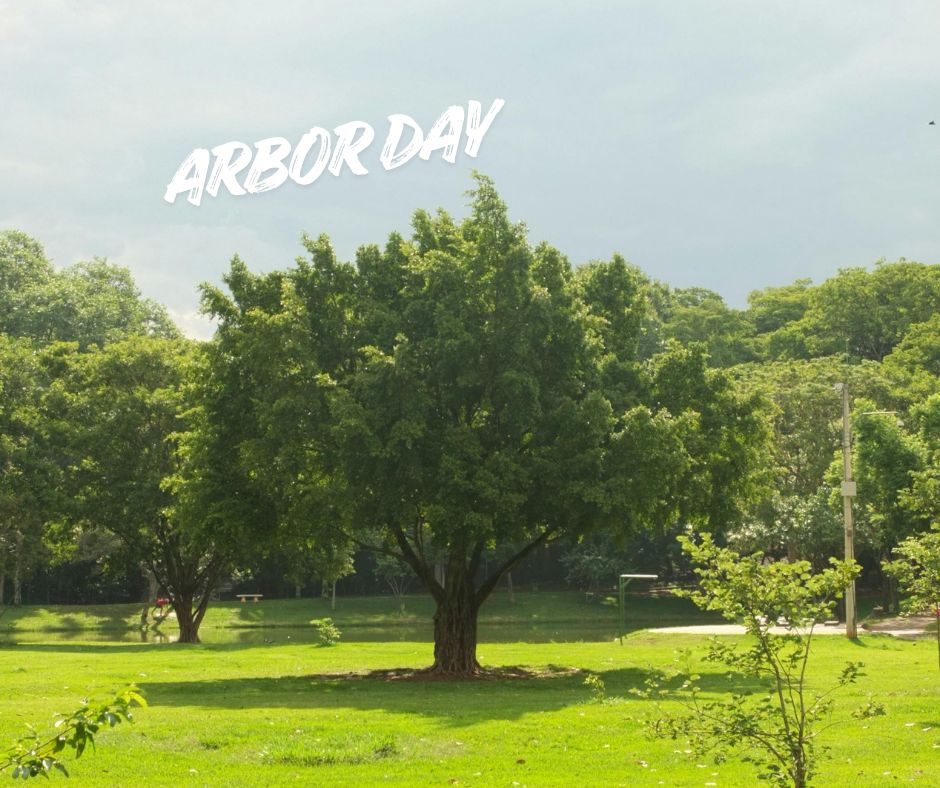
National Arbor Day 2026 is Friday, April 24, 2026 — the last Friday of April. State observances vary by planting zone; for example, Colorado observes Arbor Day on April 17, 2026, while North Dakota observes it on May 1, 2026.
This date marks the 154th anniversary of the first Arbor Day, the 54th anniversary of the Arbor Day Foundation, and the 50th anniversary of the Tree City USA program.
The Arbor Day Foundation’s flagship 2026 initiative is the Million Trees Project, a spring campaign targeting the planting of 1 million new trees while collecting “tree stories” from individuals and communities nationwide.
Table of Contents
What Is Arbor Day? History, Meaning, and Origin
Arbor Day is an annual observance dedicated specifically to planting and caring for trees. It is not a federal public holiday. Schools and offices remain open. The day functions as a civic call to direct environmental action — specifically, planting trees — rather than broad environmental advocacy.
The Meaning of “Arbor” and Why It Distinguishes Arbor Day from Earth Day
“Arbor” derives from the Latin word for tree. The same root appears in “arboretum” — a curated collection of trees grown for scientific study and public display — and in “arborist,” the term for a certified tree care specialist. The naming is deliberate: Arbor Day is not a general environmental awareness day.
It centers on one specific act. Earth Day, observed on Wednesday, April 22, 2026 — two days before Arbor Day — focuses on broader environmental issues, including pollution, climate policy, and biodiversity. The two observances are related but structurally distinct.
Who Founded Arbor Day and When?
Julius Sterling Morton founded Arbor Day on April 10, 1872, in Nebraska. Morton, then serving on Nebraska’s State Board of Agriculture, proposed the observance to address the widespread treelessness of the Great Plains. On the first Arbor Day, an estimated 1 million trees were planted across Nebraska.
The state declared April 22 — Morton’s birthday — as Arbor Day, a date later standardized nationally to the last Friday of April to align with optimal spring planting conditions across most of the continental United States.
The Arbor Day Foundation was established in 1972, exactly 100 years after Morton’s first observance, in Nebraska City, Nebraska — the same city where Morton lived. The Foundation operates as a 501(c)(3) nonprofit.
Why Arbor Day Remains Relevant in 2026
Trees perform measurable ecological functions. A mature tree can absorb between 48 and 100 pounds of carbon dioxide annually, depending on species and size, according to the U.S. Forest Service.
Urban trees reduce ambient air temperatures through evapotranspiration, with dense canopy cover lowering surface temperatures by up to 10°F compared to unshaded areas (EPA, Urban Heat Island Effect data). Urban trees intercept stormwater, reducing runoff volume and downstream flooding risk.
The Food and Agriculture Organization of the United Nations (FAO) and the Arbor Day Foundation jointly recognized a record 283 Tree Cities of the World in the 2025–2026 cycle — cities that meet formal standards for urban forest governance, maintenance, and monitoring.
This designation signals that urban forestry has shifted from a supplementary municipal service to a core infrastructure category.
When Is Arbor Day 2026? National and State-by-State Dates
Arbor Day 2026 is Friday, April 24, 2026. This is the last Friday of April, the date used consistently by the U.S. federal observance.
However, individual states set their own Arbor Day dates based on local USDA Plant Hardiness Zones and regional planting windows. April 24 may not be the optimal planting date in every state.
Why Arbor Day Dates Vary by State
The USDA Plant Hardiness Zone Map divides the United States into 13 primary zones based on average annual extreme minimum temperatures. Zones range from Zone 1 (coldest; average minimum below −60°F) to Zone 13 (warmest; average minimum above 60°F).
A tree planted in frozen or still-frost-prone soil has a significantly lower survival rate than one planted when soil temperatures reach at least 40°F — a threshold that varies by weeks or months across the country.
Mountain and northern states observe Arbor Day in late April or early May. Southern and desert states often observe it earlier, when pre-summer heat and drought conditions have not yet set in.
Arbor Day 2026 Dates by State
| State | 2026 Arbor Day Date | USDA Zone Range | Notes |
|---|---|---|---|
| National (U.S.) | Friday, April 24, 2026 | All zones | Last Friday of April |
| Nebraska | Friday, April 24, 2026 | Zones 4b–6a | Original Arbor Day state |
| Colorado | Friday, April 17, 2026 | Zones 3b–7a | Mountain planting zone |
| North Dakota | Friday, May 1, 2026 | Zones 3a–5a | Late northern planting zone |
| Arizona | Monday, April 27, 2026 | Zones 5a–10b | Desert planting timing |
| Delaware | Monday, April 27, 2026 | Zones 6b–7b | Eastern seaboard variation |
| Wyoming | Varies by county | Zones 3a–6b | Mountain zone flexibility |
| Florida | Third Friday of January | Zones 8a–11a | Winter planting optimal |
| Texas | First Friday of November | Zones 6a–10b | Fall planting for most regions |
| California | March 7–15 (varies by county) | Zones 5a–11a | Coastal vs. inland split |
Note: State-specific 2026 dates should be verified with each state’s Department of Agriculture or Forestry division, as proclamations may adjust annually.
International Arbor Day Dates in 2026
Arbor Day is not a globally unified observance. Over 50 countries have established their own tree-planting days, set according to local climate conditions and policy frameworks.
| Country / Region | Observance Name | Date |
|---|---|---|
| Philippines | Arbor Day | Thursday, June 25, 2026 |
| South Africa | Arbor Week | First week of September 2026 |
| Kenya | National Tree Growing Day | November 21, 2026 |
| Australia | National Tree Day | Sunday, July 26, 2026 |
| Japan | Greenery Day (Midori no Hi) | Thursday, May 4, 2026 |
How to Get Free Trees for Arbor Day 2026
The Arbor Day Foundation offers 10 free tree seedlings to new members who donate $10 or more. This is the Foundation’s primary member recruitment mechanism.
The trees arrive as bare-root seedlings — dormant, rootless plants without soil — shipped in late winter or early spring based on planting zone.
The Arbor Day Foundation’s 10 Free Trees Program: Step-by-Step
The process follows a specific sequence. Complete each step in order to receive seedlings before the April 24, 2026 observance.
- Visit arborday.org and navigate to the “10 Free Trees” offer page.
- Select a tree package. The Foundation offers zone-matched packages; the site uses your ZIP code to assign the correct regional mix.
- Complete the membership form with a minimum $10 donation.
- Confirm the shipping address. Bare-root seedlings ship only to U.S. addresses within the contiguous 48 states. Alaska and Hawaii are excluded from most seedling offers due to biosecurity regulations.
- Receive confirmation of your species selection and estimated ship date. Shipping typically occurs when local soil temperatures are appropriate for planting, which varies by zone.
- Plant seedlings within 24 hours of receipt, or store them temporarily using a process called “heeling in” — placing roots in moist soil or wrapping them in damp burlap until planting conditions are ready.
What to realistically expect: Bare-root seedling survival rates vary. Reddit discussions in r/gardening and r/trees document frequent complaints about losing 4–7 of 10 seedlings, particularly when buyers delay planting, allow roots to dry, or plant in poorly drained soil.
A 60–70% first-year survival rate is common for bare-root seedlings under average care conditions, according to urban forestry extension literature from the University of Minnesota Extension.
Survival improves significantly with mycorrhizal inoculant applied at planting (see the Smart Urban Forestry section below).
Free Trees From Utility Companies and Corporate Partners in 2026
Several corporate and utility programs distribute free trees independently of the Arbor Day Foundation:
| Program | Provider | Eligibility | Trees Available |
|---|---|---|---|
| Subaru Loves the Earth | Subaru of America | Subaru vehicle owners/registrants | Varies by year |
| Tree Giveaway Program | Duke Energy Florida | Florida residential customers | Up to 1,000 total per event |
| Residential Tree Program | City of High Point, NC | Residents with proof of address | 1 tree per household |
| Spring Tree Distribution | Montgomery County, MD | County residents at designated events | Bare-root and potted species |
To identify additional programs in your area: search “[utility company name] free tree 2026” or “[city name] Arbor Day free tree program 2026” and check your municipal parks and recreation department website.
Tips for Keeping Free Seedlings Alive
Bare-root seedling failure is preventable in most cases. Apply the following practices:
- Plant within 24 hours of receipt. If planting must be delayed, keep roots moist and cool — below 50°F if possible. Never let roots dry out or sit in standing water.
- Dig the hole two times wider than the root spread and no deeper than the root collar (the point where roots meet the trunk base). Planting too deep is one of the leading causes of seedling death.
- Apply 2–4 inches of mulch in a ring around the base, keeping mulch 3 inches away from the trunk to prevent rot. Mulch retains soil moisture and moderates temperature.
- Water deeply at planting — 1 gallon per inch of trunk diameter — then maintain consistent soil moisture for the first 30 days. Do not rely on rainfall alone during dry spells.
- Apply mycorrhizal inoculant to the root zone at planting. Products like MycoBloom or Espoma Bio-tone contain mycorrhizal fungi (specifically Glomus intraradices and related species) that colonize roots and increase water and nutrient uptake. Field trials show 15–30% improvement in first-year survival with inoculant application.
Arbor Day 2026 and the Million Trees Project
The Million Trees Project is the Arbor Day Foundation’s 2026 spring campaign, targeting the planting of 1 million new trees across the United States through individual, school, and community participation. The campaign coincides with the 50th anniversary of the Tree City USA program.
What the Million Trees Project Requires From Participants
Participation operates at three levels:
- Individual: Plant at least one tree, then submit a “tree story” — a short narrative or photo documenting what was planted, where, and why — through the Arbor Day Foundation’s storytelling platform at arborday.org.
- School or classroom: Register a school tree planting event, log trees planted, and submit student tree stories to the campaign database.
- Community or municipality: Tree City USA communities and municipal forestry departments can register mass planting events, with trees counted toward the million-tree goal.
How the Million Trees Project Connects to Climate Targets
The campaign’s framing aligns with nature-based climate solutions — a formal category in IPCC reporting referring to ecosystem protection and restoration as mechanisms for carbon sequestration and climate adaptation.
A single urban tree sequesters carbon at a rate of 10–40 pounds per year in its first decade and 48–100 pounds per year once mature, depending on species and growing conditions.
An urban tree canopy also reduces building energy consumption: a study published in Urban Forestry & Urban Greening (2019) found that strategically placed shade trees reduced residential cooling energy use by 8–18% in USDA Zones 5–8.
The Foundation has adopted a “Survival Rate over Planting Rate” philosophy — a documented shift from maximizing raw tree counts toward ensuring long-term tree establishment. This approach acknowledges that a tree planted and thriving at year five delivers more ecological value than ten planted and dead at year one.
Tree Cities of the World: The 2026 Record
The Tree Cities of the World program is administered jointly by the FAO and the Arbor Day Foundation. It recognizes cities that demonstrate formal commitment to urban forest governance through five standards: establishing responsibility for urban forest management, setting urban forest policy, tracking and communicating results, budgeting for urban forest resources, and celebrating and raising awareness of urban trees.
In the 2025–2026 cycle, 283 cities globally received or maintained Tree City of the World designation — the highest total in the program’s history. Cities on the list include London, Singapore, Sydney, São Paulo, and over 40 U.S. cities. A full searchable list is available at arborday.org/treecitiesoftheworld.
To find out if your city holds the designation or how to apply for 2027 recognition, contact your municipal parks or urban forestry department. Applications typically open in the third quarter of the year prior.
Smart Urban Forestry in 2026: Technology, Soil Science, and Species Strategy
Urban forestry in 2026 uses tools and frameworks not available to practitioners even five years ago. Three areas have materially changed how cities and individuals plant trees.
LiDAR Canopy Mapping and Citizen Science
LiDAR (Light Detection and Ranging) technology now enables precise urban tree canopy measurement at the individual tree level. Cities including New York, Los Angeles, and Chicago have conducted LiDAR-based canopy surveys that map every tree in a municipality — location, height, crown spread, and species — with sub-meter accuracy.
Smartphone-based LiDAR, available on Apple iPhone Pro models since 2020, has made low-cost canopy measurement accessible to individual users. Applications including iTree Canopy (developed by the USDA Forest Service), TreeTalk, and Canopy — a nonprofit-built platform — allow individuals to map and monitor street trees and contribute data to municipal inventories.
The practical implication: planting decisions are increasingly data-driven. A city with LiDAR canopy data can identify heat-vulnerable neighborhoods with less than 10% canopy cover — the minimum threshold generally associated with measurable urban heat island mitigation — and prioritize plantings in those zones. This approach maximizes impact per tree planted.
Soil Microbial Health and the Funga Connection
Mycorrhizal fungi — the fungal networks that form symbiotic relationships with tree roots — are now a recognized factor in urban tree establishment success.
The term “funga” refers to fungal communities in the same way “flora” and “fauna” refer to plant and animal communities, respectively. The concept entered mainstream conservation science in 2023.
Funga PBC, a U.S.-based company, uses DNA sequencing to analyze soil microbial communities and match appropriate mycorrhizal inoculants to specific tree species and local soil conditions.
This approach improves root colonization rates and early tree establishment in compacted, disturbed urban soils — the conditions most street trees encounter.
For individuals planting Arbor Day seedlings: off-the-shelf mycorrhizal inoculant products (Espoma Bio-tone, Great White, and MycoBloom are widely available at garden centers) contain multiple Glomus species and can be applied directly to bare roots at planting.
This is the single most evidence-supported modification to standard bare-root planting practice.
Choosing the Right Tree Species for 2026 Climate Conditions
Species selection has moved from aesthetic preference to ecological function. Two principles now guide 2026 best practices:
Species diversification as risk management. The loss of American Elm (Ulmus americana) to Dutch Elm disease and Ash (Fraxinus spp.) to Emerald Ash Borer (Agrilus planipennis) demonstrated what happens when urban forests rely on single-species monocultures.
Urban forestry professionals now target a maximum of 10% representation for any single species, 20% for any single genus, and 30% for any single family — a standard promoted by the Society of Municipal Arborists.
Native species selection for ecological connectivity. Native trees support significantly higher populations of native insects than non-native species. Research by entomologist Dr. Doug Tallamy (University of Delaware) found that native oaks (Quercus spp.)
support 534 species of lepidoptera (moth and butterfly) larvae, compared to fewer than 5 for many commonly planted non-native ornamentals. Native lepidoptera are a primary food source for nesting birds, making native tree species disproportionately important to urban wildlife networks.
How to Celebrate Arbor Day 2026: Activities for Every Audience
Arbor Day activities fall into four broad categories: planting, education, community organizing, and corporate engagement. Each serves a distinct audience with distinct outcomes.
Arbor Day Activities for Kids and Families
Direct participation in planting is the most effective way to build lasting environmental awareness in children, according to research in environmental psychology (Cheng & Monroe, 2012, Environment and Behavior). The following activities are organized by age group.
Ages 4–7:
- Tree identification walks using free applications including iNaturalist and LeafSnap (iOS and Android, free download)
- Leaf rubbings on paper using wax crayons — produces detailed vein patterns that can be labeled with species names
- Read-aloud with The Giving Tree (Shel Silverstein) or A Tree Is Nice (Janice May Udry, Caldecott Medal winner)
Ages 8–12:
- Plant a bare-root seedling from the Arbor Day Foundation’s 10-tree program — children can measure and photograph growth weekly
- Edible forest gardening introduction: plant a dwarf apple, pear, or serviceberry tree
- Pressed leaf herbarium project: collect, press, and identify 10 local species
Ages 13–18:
- STEM integration: calculate tree height using trigonometry (angle of elevation + distance from base)
- iTree Eco urban canopy survey in a local park, contributing data to USDA Forest Service databases
- Research and present on one locally threatened tree species
Arbor Day Activities for Schools and Classrooms
The Arbor Day Foundation’s Tree Campus K–12 program provides free resources including lesson plans, seedlings for school grounds, and curriculum materials for science, history, and English classes.
Schools with existing plantings can participate in the Adopt-a-Tree program, in which students track a single tree’s growth, phenology (leaf-out and dormancy timing), and wildlife interactions across the school year.
STEM curriculum integration options include:
- Math: Calculate canopy area using the formula πr² where r is the average radius of crown spread
- Science: Design a simple photosynthesis experiment using leaf disk flotation
- History: Primary source analysis of Julius Sterling Morton’s 1872 speech to Nebraska’s State Board of Agriculture
- English/Language Arts: Write a persuasive essay on whether the city should add 10,000 trees in heat-vulnerable neighborhoods
How to Host a Community Arbor Day Planting Event
Organizing a neighborhood or school tree planting from scratch requires six steps. Sequence matters — sourcing trees before securing a planting site, for example, creates logistical problems.
- Partner with your local parks department or Tree City USA program. Most municipalities require permits for tree planting on public land. Parks departments often have approved species lists and preferred planting locations. Contact them at least 8 weeks before April 24, 2026.
- Source trees through one of three channels: Arbor Day Foundation bulk tree programs; local utility company giveaways; or a licensed local nursery for balled-and-burlapped specimens.
- Apply the “right tree, right place” principle to site selection. Assess overhead utility lines (avoid tall-maturing species beneath power lines), pavement proximity (avoid shallow-rooted species near sidewalks), and soil drainage before selecting species.
- Recruit volunteers with defined roles. Assign one trained crew leader per 4–6 volunteers. Roles include hole digging, root inspection and preparation, planting, mulching, and watering.
- Plan post-event aftercare explicitly. The most common community planting failure is inadequate follow-up watering. Assign specific individuals or organizations responsible for watering in weeks 2–8 post-planting.
- Submit your tree count and a tree story to the Million Trees Project at arborday.org. Your community’s trees contribute toward the 2026 national goal.
Corporate Arbor Day Engagement and CSR
Tree planting events serve documented corporate social responsibility (CSR) objectives. A 2022 Edelman Trust Barometer survey found that 86% of employees expect their employer to take a stance on social and environmental issues. Tree planting provides a low-cost, photogenic, and measurable CSR action.
Corporate participation options include:
- Team planting events: Partner with a local parks department or Tree City USA community. A crew of 20 employees can plant 40–60 trees in a 4-hour event with basic training.
- Forestry carbon credit programs: Verified forestry carbon credits (verified by Verra’s VCS or American Carbon Registry) allow businesses to fund reforestation in exchange for quantified carbon sequestration. Credits in 2025–2026 traded at approximately $8–$20 per metric ton of CO₂ on voluntary markets.
- Bulk seedling gifting: The Arbor Day Foundation offers branded corporate tree programs — employees receive seedlings with branded certificates.
Memorial Trees for Arbor Day 2026: Plant a Tree in Someone’s Honor
A memorial tree is a living tree planted in honor or memory of a specific individual. The Arbor Day Foundation processes memorial tree orders through its “Trees in Memory” and “Tribute Trees” programs. A tree is planted in an area of the United States national forest system experiencing reforestation need — not in the recipient’s backyard.
This distinction is important: the Foundation plants in national forests to maximize ecological impact. The recipient receives an acknowledgment card or certificate confirming a tree was planted in the named person’s honor. No GPS location is provided under the standard program tier.
Memorial Tree Pricing Through the Arbor Day Foundation in 2026
Pricing tiers below are based on 2025 program data. Verify current 2026 pricing directly at arborday.org before purchase, as programs may adjust annually.
| Program | Approximate Starting Price | What Is Included |
|---|---|---|
| Trees in Memory (standard) | ~$10 | Acknowledgment card; tree planted in U.S. national forest |
| Tribute Trees (personalized) | ~$25+ | Named certificate; optional message; Foundation record |
| Memorial Grove (multiple trees) | ~$100+ | Grove dedication; plaque option available |
| Corporate Memorial Program | Custom pricing | Bulk planting; branded certificates; dedicated acknowledgment |
Alternatives to Foundation Memorial Trees
The Arbor Day Foundation is not the only option. Five alternatives offer different formats:
- Local nursery memorial plantings: Some nurseries will plant and tag a tree on your property or in a community space in someone’s name. This allows a physical location the family can visit.
- City street tree dedications: Many municipalities offer formal naming programs for public street trees. Plaques are attached to the tree stake at planting. Contact your city’s urban forestry department.
- Memorial orchard programs: Organizations including Fruit Tree Planting Foundation (FTPF) and regional land trusts offer memorial plantings in community orchards.
- DIY yard planting: Planting a tree on private property in someone’s memory carries no official program structure but offers a permanent, accessible location. Choose a species matched to your USDA hardiness zone with a mature size appropriate to available space.
Memorial Trees as Arbor Day Gifts
A memorial tree certificate functions as a sympathy gift, anniversary gift, retirement acknowledgment, or birthday gift. Etiquette guidelines for sympathy contexts:
- Send within 2–4 weeks of a loss, or on the first anniversary as a remembrance gift.
- Include a card noting the species planted and the national forest location if known.
- Do not frame it as a substitute for a financial donation if the family has specified a preferred memorial charity.
Is the Arbor Day Foundation Legitimate? Charity Ratings and Transparency
The Arbor Day Foundation is a registered 501(c)(3) nonprofit organization founded in 1972 in Nebraska City, Nebraska. It claims membership of over 1 million individuals, making it one of the largest tree-planting nonprofits in the United States by membership count.
Charity Ratings and Accreditation Status
Rather than reproducing specific scores — which change with each assessment cycle — the following sources provide current evaluations:
- Charity Navigator (charitynavigator.org): Rates nonprofits on financial health, accountability, and transparency. Search “Arbor Day Foundation” for the current score.
- BBB Wise Giving Alliance (give.org): Accreditation indicates meeting 20 voluntary standards for charity accountability.
- GuideStar / Candid (candid.org): Provides access to the Foundation’s Form 990 tax filings, which disclose program expenses, administrative costs, and executive compensation.
When evaluating any nonprofit, program expense ratio — the percentage of total expenses allocated directly to mission-related programs versus administrative and fundraising costs — is the most commonly used financial health indicator. A ratio of 65% or higher toward program expenses is generally considered acceptable; 75% or higher is considered strong.
What Reddit Discussions Reveal About User Experience
Recurring themes across r/gardening, r/nonprofit, and r/trees discussions about the Arbor Day Foundation include:
- Seedling survival rates: Multiple threads document losing 4–7 of 10 seedlings, often attributed to delayed planting, improper storage, or inadequate watering. This is a bare-root seedling challenge, not unique to Foundation trees, but the expectation gap is real.
- Donor communications: Some users report receiving frequent solicitation mailings after joining. The Foundation uses a membership model in which ongoing donations fund program operations.
- Charity rating changes: Historical discussion threads reference rating fluctuations. Current ratings are best verified directly with Charity Navigator or Candid.
What due diligence looks like before donating:
- Check the most recent Charity Navigator rating at charitynavigator.org.
- Review the Foundation’s current Form 990 on Candid.org for program expense ratio.
- Confirm BBB Wise Giving Alliance accreditation status at give.org.
- Evaluate whether the specific program (free trees, memorial trees, Tree City USA) aligns with your intended use.
Arbor Day vs. Earth Day: Key Differences
Arbor Day and Earth Day are separate observances with different origins, organizers, and intended actions.
Side-by-Side Comparison
| Attribute | Arbor Day 2026 | Earth Day 2026 |
|---|---|---|
| Date | Friday, April 24, 2026 | Wednesday, April 22, 2026 |
| Primary focus | Tree planting | Broad environmental issues |
| Origin year | 1872 (Nebraska) | 1970 (national U.S. movement) |
| Founding figure | Julius Sterling Morton | Senator Gaylord Nelson |
| Organizing body | Arbor Day Foundation | Earth Day Network (earthday.org) |
| Primary action | Plant trees | Advocacy, education, cleanup events |
| Federal holiday status | No | No |
| Age in 2026 | 154 years | 56 years |
| Global scope | 50+ countries, varied dates | 193+ countries, fixed April 22 |
Can Both Be Celebrated Together?
In 2026, the proximity of Earth Day (Wednesday, April 22) and Arbor Day (Friday, April 24) creates a 72-hour environmental action window. Schools and communities can structure a combined “Environmental Action Week” spanning April 20–24, 2026: Earth Day activities focused on climate education and policy on April 22, and a tree planting event on April 24.
World Forestry Day, observed annually on Saturday, March 21, provides an additional framing point earlier in the year for organizations that run year-long environmental curriculum.
Best Trees to Plant for Arbor Day 2026, by Region
The right tree for Arbor Day 2026 depends first on USDA Plant Hardiness Zone, then on site conditions including soil drainage, sun exposure, overhead clearance, and proximity to pavement. Species that thrive in one region may fail or become invasive in another.
The “right tree, right place” principle — used by the Arbor Day Foundation, the International Society of Arboriculture (ISA), and the USDA Forest Service — is the single most important concept in tree selection.
How to Choose the Right Tree: The Selection Filter
Apply the following filters in sequence before selecting a species:
- USDA hardiness zone: Verify your zone at planting.ars.usda.gov. Enter your ZIP code for a specific zone assignment.
- Soil drainage: Test by digging a 12-inch hole, filling it with water, and measuring how long it takes to drain. More than 4 hours indicates poor drainage; species selection must account for flood tolerance.
- Sun exposure: Full sun = 6+ hours of direct sunlight daily. Part shade = 3–6 hours. Deep shade = fewer than 3 hours. Most trees require full sun; shade-tolerant species include dogwood (Cornus florida) and American hornbeam (Carpinus caroliniana).
- Mature size vs. available space: Check the mature height and crown spread of any species before planting. A tree planted beneath a utility line that reaches 40 feet at maturity will require removal within 10–20 years — a net loss for the planting investment.
- Native vs. adapted non-native: Native species support higher insect biodiversity (Tallamy, University of Delaware research) and typically require less irrigation and fertilization once established in their native range.
Best Native Trees by U.S. Region for Arbor Day 2026
Northeast and Mid-Atlantic (USDA Zones 4b–7b)
| Species | Common Name | Mature Height | Key Attributes |
|---|---|---|---|
| Acer saccharum | Sugar Maple | 60–75 ft | Fall color, syrup production, wildlife value |
| Cercis canadensis | Eastern Redbud | 20–30 ft | Spring bloom, compact urban size, pollinator value |
| Quercus alba | White Oak | 80–100 ft | 500-year lifespan, 534 lepidoptera species supported |
Southeast and Gulf Coast (USDA Zones 7a–10a)
| Species | Common Name | Mature Height | Key Attributes |
|---|---|---|---|
| Taxodium distichum | Bald Cypress | 50–70 ft | Flood tolerant, heat resilient, deer resistant |
| Magnolia grandiflora | Southern Magnolia | 60–80 ft | Evergreen, year-round interest, drought tolerant when established |
| Pinus palustris | Longleaf Pine | 100–120 ft | Fire-adapted, critical habitat species, extreme longevity |
Midwest (USDA Zones 4a–6b)
| Species | Common Name | Mature Height | Key Attributes |
|---|---|---|---|
| Quercus macrocarpa | Bur Oak | 70–80 ft | Drought and cold tolerant, clay-soil adapted |
| Carya ovata | Shagbark Hickory | 60–80 ft | Long-lived, nut production for wildlife |
| Celtis occidentalis | Common Hackberry | 40–60 ft | Urban tough, thrives in clay, flood tolerant |
Mountain West and High Desert (USDA Zones 3a–7a)
| Species | Common Name | Mature Height | Key Attributes |
|---|---|---|---|
| Populus tremuloides | Quaking Aspen | 20–50 ft | Fast growing, clonal grove formation |
| Quercus gambelii | Gambel Oak | 15–30 ft | Drought adapted, wildlife habitat value |
| Amelanchier alnifolia | Serviceberry | 6–20 ft | Early spring bloom, edible fruit, multi-season interest |
Pacific Northwest (USDA Zones 6a–9b)
| Species | Common Name | Mature Height | Key Attributes |
|---|---|---|---|
| Thuja plicata | Western Red Cedar | 50–75 ft | Rot-resistant, iconic PNW species, dense habitat |
| Acer macrophyllum | Big Leaf Maple | 50–100 ft | Fast growing, habitat tree, large-canopy former |
| Quercus garryana | Oregon White Oak | 40–90 ft | Fire-adapted, critically rare savanna species |
Southwest and Desert (USDA Zones 7b–10b)
| Species | Common Name | Mature Height | Key Attributes |
|---|---|---|---|
| Chilopsis linearis | Desert Willow | 15–30 ft | Extreme heat and drought tolerant, hummingbird attractor |
| Prosopis velutina | Velvet Mesquite | 20–30 ft | Nitrogen-fixing, deep roots, edible seed pods |
| Hesperocyparis arizonica | Arizona Cypress | 40–70 ft | Evergreen windbreak, low water requirement |
Trees for Urban Heat Island Mitigation
Urban heat island (UHI) effect raises city temperatures by 2–10°F compared to surrounding rural areas (EPA). Large-canopy deciduous trees planted on the south and west sides of buildings provide summer shade while allowing winter solar gain. The following species are rated highly for urban heat island mitigation in their respective zones:
- Eastern U.S.: London Planetree (Platanus × acerifolia) — pollution tolerant, large canopy, used extensively in New York City street tree programs
- Midwest: Swamp White Oak (Quercus bicolor) — tolerates urban soils, large canopy, native
- Southwest: Texas Live Oak (Quercus fusiformis) — drought-resistant, semi-evergreen, large canopy in Zone 8b–9a
Arbor Day 2026 FAQs
When is Arbor Day 2026?
Arbor Day 2026 is Friday, April 24, 2026 — the last Friday of April. This is the standard national U.S. observance date. Individual states set separate dates based on regional planting zones; for example, Texas observes Arbor Day in November and Florida in January.
Is Arbor Day a national holiday in the United States?
No. Arbor Day is a national observance, not a federal public holiday. Schools, government offices, and businesses remain open. The distinction matters: federal holidays require government and typically banking closures; national observances are commemorative designations with no mandated closures.
What are the 10 free trees from the Arbor Day Foundation?
New Arbor Day Foundation members who donate $10 or more receive 10 bare-root tree seedlings matched to their USDA planting zone. Species vary by region and are selected by the Foundation’s horticulture staff for climate suitability. Common packages include a mix of deciduous trees such as sugar maple, red maple, flowering dogwood, white flowering dogwood, river birch, or white pine, depending on geographic zone. The Foundation selects species; members do not choose individual species in most standard packages.
How much do memorial trees cost through the Arbor Day Foundation?
Standard memorial tree programs begin at approximately $10 for a basic acknowledgment card and tree planted in a U.S. national forest. Personalized tribute certificates start at approximately $25. Memorial grove dedications with plaque options begin at approximately $100. Corporate memorial programs are custom-priced based on volume. Verify current 2026 pricing at arborday.org before purchase.
What does “arbor” mean?
“Arbor” is the Latin word for tree. The same root appears in “arboretum” (a collection of trees grown for scientific study), “arborist” (a certified tree care specialist), and “arborvitae” (Latin for “tree of life” — a common name for Thuja species). The name distinguishes the observance from general environmental days: the focus is specifically and exclusively on trees.
What is Tree City USA and how does a city qualify?
Tree City USA is an Arbor Day Foundation recognition program, established in 1976, now in its 50th anniversary year in 2026. A city qualifies by meeting four standards: maintaining a tree board or department; having a community tree ordinance; spending at least $2 per capita on urban forestry annually; and observing Arbor Day with a public ceremony. Over 3,600 U.S. communities currently hold the designation. A full list is available at arborday.org/programs/treecityusa.
Can I get a tax deduction for planting trees in 2026?
Tax treatment of tree planting depends on the purpose and property type. Residential tree planting on personal property does not generate a federal tax deduction. Tree planting on agricultural land may qualify under conservation easement or farm tax provisions, subject to IRS guidelines. Corporate donations to Arbor Day Foundation tree programs may qualify as charitable contributions under 501(c)(3) donation rules. Consult a licensed tax professional for guidance specific to your situation. The IRS does not recognize tree planting as a standalone deductible activity for residential taxpayers.
How do I find Arbor Day 2026 events near me?
Four channels identify local Arbor Day 2026 events: the Arbor Day Foundation’s event finder at arborday.org; your local city or county parks and recreation department website; Tree City USA community listings; and a direct search using the query “[your city name] Arbor Day 2026 events.” Municipal events are typically announced 4–8 weeks before April 24, 2026, so checking in early April is appropriate.
Three Actions Before Friday, April 24, 2026
Arbor Day 2026 falls on Friday, April 24, 2026 — 154 years after Julius Sterling Morton’s first tree planting observance in Nebraska. Three actions can be completed before or on that date:
- Claim free trees. Join the Arbor Day Foundation with a $10 donation at arborday.org. Order now — bare-root seedlings for April 24 planting must ship with sufficient lead time.
- Find or create a local event. Check your municipal parks department for organized plantings, or use the six-step community event framework in the celebrations section above to organize your own.
- Plant something. One tree in your yard, one seedling on a school grounds, one container tree on an apartment balcony — any planting counts. Submit it as a tree story to the Million Trees Project at arborday.org.
Every tree planted on Arbor Day continues a practice that predates every living participant by over a century. The 154th observance carries that continuity forward.