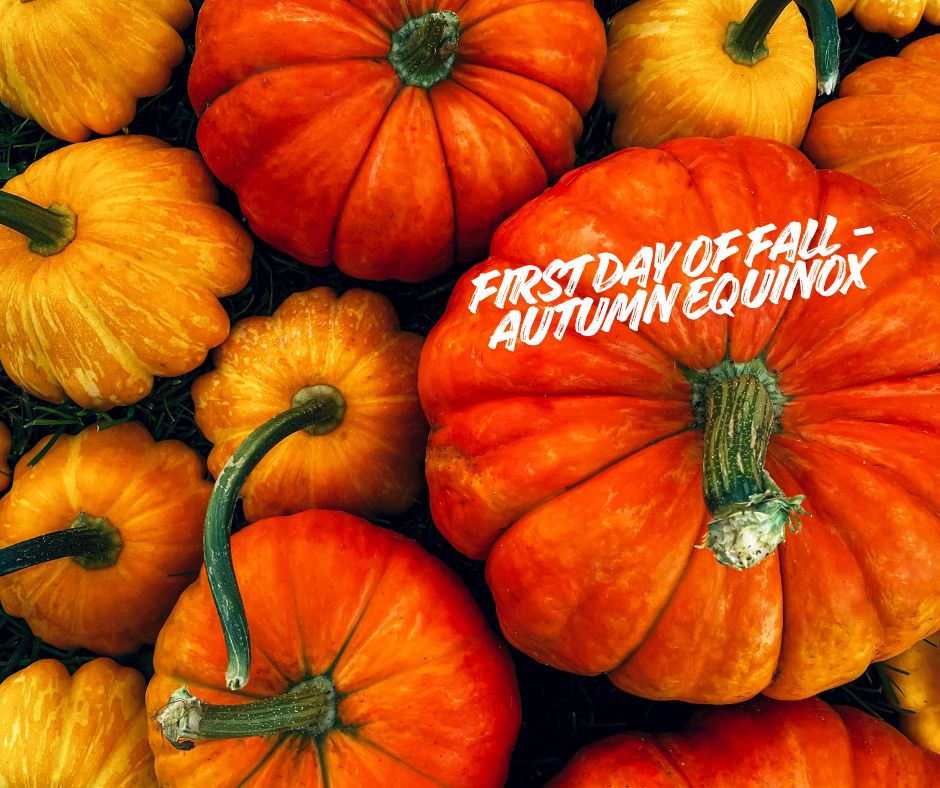
The first day of fall 2026 is Tuesday, September 22, 2026. The autumnal equinox occurs at 8:04 PM Eastern Daylight Time (EDT), which converts to 00:06 UTC on Wednesday, September 23, 2026.
This distinction matters. In time zones east of EDT — including UTC, Central European Summer Time, and across Asia — the equinox technically falls on September 23.
In all US time zones, it falls on September 22.
Table of Contents
Exact Time of the Fall Equinox 2026 by Time Zone
| Time Zone | Abbreviation | Equinox Time |
|---|---|---|
| Eastern Daylight Time | EDT | 8:04 PM, Tuesday, September 22, 2026 |
| Central Daylight Time | CDT | 7:04 PM, Tuesday, September 22, 2026 |
| Mountain Daylight Time | MDT | 6:04 PM, Tuesday, September 22, 2026 |
| Pacific Daylight Time | PDT | 5:04 PM, Tuesday, September 22, 2026 |
| Coordinated Universal Time | UTC | 00:06 AM, Wednesday, September 23, 2026 |
| British Summer Time | BST | 1:06 AM, Wednesday, September 23, 2026 |
| Central European Summer Time | CEST | 2:06 AM, Wednesday, September 23, 2026 |
Why the First Day of Fall Changes Every Year
The autumnal equinox shifts between September 22 and September 23 each year because Earth’s orbit takes approximately 365.25 days — not exactly 365.
This fractional day accumulates over time. Without correction, the equinox would drift progressively later. Leap years — which add one full day every four years — reset the drift.
The 2024 leap year pulled the equinox back to September 22, and most years through the late 2020s will follow the same September 22 date in US time zones.
Between 1796 and 2096, the September equinox falls on September 22 or September 23. September 24 last occurred in 1931. The earliest recorded modern equinox was September 21, 1000 CE, due to cumulative calendar drift before the Gregorian reform.
The governing astronomical mechanism is Earth’s position relative to the sun, not temperature, season, or calendar convention.
Check Out:
How Many Days Until the First Day of Fall 2026?
This depends on the current date. From Monday, March 9, 2026, there are 197 days until Tuesday, September 22, 2026.
View the countdown below.
Astronomical Fall vs. Meteorological Fall: Key Differences
These are two separate systems for defining when fall begins. They produce different start dates, serve different professional purposes, and should not be used interchangeably.
Astronomical Fall
Astronomical fall begins at the moment of the autumnal equinox and ends at the winter solstice. In 2026, this spans Tuesday, September 22, to Monday, December 21 — a total of 90 days.
It is defined by Earth’s orbital geometry: the instant the sun crosses the celestial equator moving southward. This is a precise, calculable moment in time, not an approximation. Astronomical fall applies equally across the entire Northern Hemisphere regardless of local temperature.
Meteorological Fall
Meteorological fall always begins on September 1 and ends on November 30 — 91 days, fixed every year. Climatologists, national weather services, and atmospheric scientists use this definition because it aligns with monthly temperature data cycles, simplifying statistical comparison across years.
The National Oceanic and Atmospheric Administration (NOAA) uses meteorological seasons as its standard for climate records. Most fall weather forecasts and seasonal climate reports reference meteorological fall, not the equinox.
Comparison: Astronomical vs. Meteorological Fall 2026
| Factor | Astronomical Fall | Meteorological Fall |
|---|---|---|
| Start Date 2026 | September 22, 2026 | September 1, 2026 |
| End Date 2026 | December 21, 2026 | November 30, 2026 |
| Duration | 90 days | 91 days |
| Defined By | Earth’s orbital position | Monthly temperature cycles |
| Used By | Astronomers, cultural calendars | Climatologists, weather services |
| Fixed Each Year? | No — shifts by 1–2 days | Yes — always Sept 1–Nov 30 |
Neither definition is incorrect. They serve different analytical purposes.
The Equilux: Why September 22 Does Not Have Equal Day and Night
A widespread misconception is that the autumnal equinox produces exactly 12 hours of daylight and 12 hours of darkness. It does not.
The word “equinox” derives from the Latin aequinoctium, meaning “equal night.” But two atmospheric phenomena prevent true equality on the equinox date itself.
First, atmospheric refraction bends sunlight around Earth’s curvature, causing the sun to appear above the horizon for several minutes after it has geometrically set. This adds approximately 6 to 8 minutes of apparent daylight at mid-latitudes.
Second, sunrise and sunset are measured from the sun’s upper limb (its leading edge), not its centre, adding further minutes to the observed day length.
The equilux — the date when sunrise-to-sunset duration is closest to exactly 12 hours — occurs a few days before the autumnal equinox in the Northern Hemisphere. For 2026, at 45°N latitude (roughly Minneapolis or Ottawa), the equilux falls on approximately Saturday, September 19, 2026. At 51°N (London), it falls approximately on Friday, September 18, 2026.
The First Day of Fall 2026 and the Harvest Moon
The Harvest Moon in 2026 rises on Saturday, September 26 — four days after the autumnal equinox. This proximity makes the fall of 2026 astronomically notable.
What Is the Harvest Moon?
The Harvest Moon is defined as the full moon occurring closest to the autumnal equinox, regardless of which calendar month it falls in. It can occur in September or October, depending on the year.
Historically, the Harvest Moon provided farmers in pre-electricity eras with enough light to continue harvesting crops after sunset.
The moon rises near the horizon at the time of the equinox, and at northern latitudes, a low-horizon full moon appears amber or orange due to light passing through a greater thickness of atmosphere — a phenomenon called Rayleigh scattering.
Harvest Moon 2026 Viewing Data
| Detail | Value |
|---|---|
| Full Moon Date | Saturday, September 26, 2026 |
| Days After Equinox | 4 days |
| Best Viewing Time | Shortly after local sunset |
| Colour at Horizon | Amber to deep orange (atmospheric scattering) |
| Optimal Latitude for Viewing | 30°N to 60°N |
The 2026 Harvest Moon is particularly close to the equinox — within 4 days — which means it rises at near-horizon angles that maximise the amber colouration effect.
Photography at this time benefits from shooting within 20 to 30 minutes of moonrise, using a telephoto lens (200mm or longer) to compress atmospheric perspective.
First Day of Fall 2026: Global Cultural Traditions
The September equinox is observed across multiple continents with distinct cultural, religious, and agricultural frameworks.
Mabon — Pagan and Wiccan Harvest Celebration
Mabon is the pagan harvest festival aligned with the autumnal equinox, observed on Tuesday, September 22, 2026. It represents the second of three harvest festivals in the Wiccan Wheel of the Year — between Lughnasadh (August 1) and Samhain (November 1).
Mabon practices include building gratitude altars with seasonal produce such as apples, corn, and gourds; burning candles in orange, red, and gold; and preparing apple-based foods as symbolic offerings.
Crystals associated with Mabon include amber, citrine, and tiger’s eye. The celebration draws its name from the Welsh deity Mabon ap Modron and was formally incorporated into Wiccan practice in the 1970s.
Higan — Japanese Buddhist Equinox Observance
Higan is a Japanese Buddhist observance centred on the equinox, practised for seven days — three days before and three days after the equinox date. The autumn 2026 Higan period runs from Saturday, September 19, to Friday, September 25, 2026.
The name derives from the Sanskrit pāram (the other shore), referring to the Buddhist concept of the afterlife. During Higan, families visit ancestral graves, clean headstones, and offer ohagi — rice cakes coated in sweet red bean paste.
The equinox is believed to be when the boundary between the world of the living and the world of the dead is thinnest. Higan is observed twice annually: at the spring equinox (Shunbun no Hi) and the autumn equinox (Shūbun no Hi), the latter being a Japanese national public holiday.
Mid-Autumn Festival and Chuseok
The Chinese Mid-Autumn Festival (中秋節) and the Korean Chuseok (추석) are harvest moon festivals that fall near — though not always on — the autumnal equinox. Both are based on the lunar calendar and occur on the 15th day of the 8th lunar month, when the moon is at its fullest.
In 2026, the Mid-Autumn Festival falls on Friday, October 2, 2026. Chuseok in South Korea also falls on October 2, with the national holiday extending from October 1 to October 3, 2026.
Traditions include: mooncake gifting (China, Vietnam), lantern lighting, family gatherings, and songpyeon rice cake preparation (Korea).
The Mid-Autumn Festival is the second most important festival in Chinese culture after the Lunar New Year, observed by an estimated 1.4 billion people across China, Vietnam, Singapore, Malaysia, and diaspora communities worldwide.
Navaratri 2026 — Nine Nights of the Goddess
Navaratri is a Hindu festival lasting nine nights, dedicated to the goddess Durga, observed in autumn across India and the Hindu diaspora.
In 2026, Sharada Navaratri begins on Saturday, October 3, 2026, and concludes on Sunday, October 11, 2026, ending with Vijayadashami (Dussehra) on October 12.
Navaratri practices vary significantly by region. In Gujarat, it centres on Garba — a circular group dance performed each night. In West Bengal, it takes the form of Durga Puja, the most elaborate public festival in the state.
Fasting, scripture reading, and the worship of nine forms of Durga (Navadurga) are common across traditions.
The Snake of Light at Chichén Itzá
At the El Castillo pyramid in Chichén Itzá, Mexico, the setting sun on the equinox creates a triangular shadow pattern along the northern staircase that resembles a serpent descending toward the ground.
The effect occurs because El Castillo’s nine platforms are precisely angled to catch the low equinox sun, casting seven triangular shadows against the staircase’s western balustrade.
This phenomenon — known as the “descending serpent” or Kukulcán effect — occurs for approximately 45 minutes around sunset on both the spring and autumnal equinox.
The alignment was engineered by Maya architects and is among the most studied examples of archaeoastronomy in the Western Hemisphere.
Chichén Itzá is designated a UNESCO World Heritage Site and receives an estimated 2.6 million visitors annually, with equinox crowds routinely exceeding 40,000 on the day of the event.
First Day of Fall 2026 by US Region: What It Actually Feels Like
September 22 does not feel like autumn across most of the United States. The astronomical equinox marks a change in solar geometry, not temperature. Regional climate realities diverge significantly from the calendar date.
Northeast and New England
By Tuesday, September 22, 2026, average high temperatures across New England range from 60°F to 70°F (15°C to 21°C). Boston averages a high of 68°F in late September.
Overnight lows drop to 48°F to 55°F. Leaf colour change begins in northern Vermont and New Hampshire by mid-September, but does not reach peak in southern New England until mid-October.
The Northeast experiences the most clearly defined transition aligned with the astronomical calendar. Apple-picking season at commercial orchards typically runs from late August through October across Massachusetts, New York, and Connecticut.
The South and Florida
In Florida, Texas, and across the Gulf South, September 22 typically registers temperatures of 85°F to 92°F (29°C to 33°C) — effectively summer conditions. Miami’s average high on September 22 is 89°F. Houston averages 90°F. Humidity remains above 70% in coastal areas.
Meteorological autumn does not arrive in practical terms across most of the Deep South until late October or November. The psychological experience of “fall” — cooler mornings, lower humidity — typically begins in earnest in early November in Florida and along the Gulf Coast.
For residents of the South, the equinox is an astronomical event, not a sensory experience of seasonal change.
The Pacific West Coast
California, Oregon, and Washington experience a Mediterranean-influenced fall — drier than the East, with temperatures moderating gradually rather than dramatically. Los Angeles averages 83°F on September 22. Portland, Oregon averages 71°F. Wine country harvest season — notably in Napa Valley, Willamette Valley, and Sonoma — peaks in September and October, aligning closely with the equinox period.
Fall Foliage Peak Dates by Region
| Region | Peak Foliage Window |
|---|---|
| Northern Vermont / New Hampshire | Late September to mid-October |
| Adirondacks and Hudson Valley, New York | Early to mid-October |
| Smoky Mountains, North Carolina | Mid to late October |
| Ozarks, Arkansas and Missouri | Late October to early November |
| Blue Ridge Parkway, Virginia | Mid to late October |
| Lower Midwest (Indiana, Ohio) | Mid to late October |
| Gulf South and Florida | No significant foliage change |
Climate data from recent decades shows fall foliage peak dates have shifted approximately 5 to 10 days later across the eastern United States compared to 1950 baselines, according to research published by Boston University’s Department of Earth and Environment.
How to Celebrate the First Day of Fall 2026
First Day of Fall Activities for Adults
The following activities are suited to the September 22 equinox across temperate US regions.
- Equinox sunrise or sunset viewing: The sun rises due east and sets due west on the equinox — the only two dates in the year when this is geometrically exact. Positioning at an unobstructed eastern or western horizon provides a direct alignment.
- Apple and pumpkin picking: Commercial orchards in the Northeast and Midwest are in peak season by late September. U-pick farms typically run from late August through October 31.
- Equinox bonfire or fire pit gathering: Permissible in most suburban areas outside of fire restriction zones. Check county burn bans before September 22.
- Gratitude journaling or Mabon ritual: Secular gratitude practice or structured Mabon altar-building, depending on the practitioner’s framework.
- Fall foliage hiking: Early-season colour is visible in northern states and at higher elevations by September 22. Trails in the Green Mountains (Vermont) and White Mountains (New Hampshire) show colour by mid-September.
First Day of Fall Activities for Kids and Toddlers
The following activities require minimal preparation and suit children aged 2 to 10.
- Leaf rubbings: Place a freshly fallen leaf face-down, cover with paper, and rub lightly with a peeled crayon. Works with maple, oak, and ginkgo leaves.
- Nature scavenger hunt: Create a checklist including: one acorn, one red leaf, one yellow leaf, one pinecone, one piece of bark. Print in advance.
- Apple stamping art: Cut an apple in half crosswise. Dip in non-toxic tempera paint. Press onto paper. The cross-section reveals a natural star pattern.
- Fall sensory bin: Fill a storage bin with dried corn kernels, small gourds, acorns, and autumn leaves. Appropriate for ages 3 and above with supervision.
- Pumpkin decorating (no-carve): Use acrylic craft paint for ages 3 and older. Carving is appropriate for children aged 8 and older with adult supervision.
First Day of Fall Recipes and Dinner Ideas
The equinox date aligns with peak availability of several produce items across the Northern Hemisphere: butternut squash, acorn squash, sweet potatoes, apples, pears, and late-season corn.
The following dishes use ingredients at their seasonal peak on or around September 22.
- Butternut squash soup: Roast halved squash at 400°F for 45 minutes. Blend with vegetable stock, nutmeg, and cream. Serves 4 in approximately 1 hour total.
- Apple cider braised chicken thighs: Sear bone-in thighs in a Dutch oven, deglaze with 1 cup hard or fresh cider, add rosemary and shallots, braise at 325°F for 40 minutes.
- Pumpkin spice chai (homemade): Steep 2 black tea bags with 1 cinnamon stick, 4 cardamom pods, 2 cloves, and ¼ tsp fresh ginger in 2 cups whole milk. Add 1 tbsp pumpkin purée and maple syrup to taste. Do not boil after adding milk.
- Slow cooker white bean and kale soup: Combine 2 cans cannellini beans, 1 bunch kale, 4 cups chicken stock, 1 diced onion, 3 garlic cloves, and 1 tsp smoked paprika. Cook on low for 6 hours.
First Day of Fall Outfit Ideas
Transitional dressing for September 22 requires layering because morning and afternoon temperatures can differ by 15°F to 25°F in most temperate US regions.
The following outfit frameworks apply to the equinox date across the Northeast, Midwest, and Pacific Northwest.
- Casual/everyday: Oversized crewneck sweater (fleece or French terry), straight-leg or wide-leg jeans, white leather sneakers or ankle boots. Suitable for temperatures 55°F to 70°F.
- Work/office: Tailored blazer in camel or rust over a fitted mock-neck top, tailored trousers, block-heel loafers. Layer removal is appropriate for heated indoor environments.
- Teacher/classroom: Comfortable midi dress with a knit cardigan and flat ankle boots. Machine-washable fabrics are recommended for active classroom environments.
- University/college campus: Oversized hoodie or pullover, cargo trousers or wide-leg cords, clean sneakers or platform Birkenstock-style sandals transitioning to Chelsea boots by mid-October.
For the South and Florida on September 22, linen or lightweight cotton in transitional colours (burnt orange, terracotta, deep green) allows seasonal visual cues without thermal discomfort in 85°F to 90°F conditions.
First Day of Fall Quotes
The following quotes are in the public domain or attributed to sources whose works have entered public domain status.
Poetic and reflective:
- “Delicious autumn! My very soul is wedded to it, and if I were a bird I would fly about the earth seeking the successive autumns.” — George Eliot (Mary Ann Evans), letter, 1841.
- “Autumn is a second spring when every leaf is a flower.” — Albert Camus.
- “Every leaf speaks bliss to me, fluttering from the autumn tree.” — Emily Brontë.
Short captions for social media:
- “September 22. It’s official.”
- “Autumn equinox. The sun rises due east, sets due west, and the light shifts for the next 90 days.”
- “Four seasons. This is the one.”
- “Fall started. Everything else can wait.”
- “Harvest Moon in four days. First day of fall today.”
Business and realtor-friendly:
- “Fall is a season of transition — and so is the real estate market. September through November historically mark a shift in inventory and buyer urgency. [Your area] listings are moving. Here’s what you need to know.”
The First Day of Fall and Seasonal Health
How the Autumnal Equinox Affects Sleep and Circadian Rhythm
After September 22, 2026, daily daylight decreases by approximately 2 to 3 minutes per day at mid-latitudes until the winter solstice on December 21.
This reduction in light exposure directly affects melatonin production.
The suprachiasmatic nucleus (SCN) in the hypothalamus regulates the circadian clock by responding to light entering the retina. As days shorten post-equinon, the brain’s melatonin onset time shifts earlier — meaning melatonin production begins earlier in the evening, triggering earlier sleepiness.
Research published in the Journal of Sleep Research confirms that seasonal transitions in light exposure alter sleep timing by 15 to 45 minutes on average over the 8 weeks following the autumnal equinox.
Practical adjustments include: maintaining consistent wake times regardless of darkness, increasing morning bright light exposure (10,000 lux light therapy lamps for 20 to 30 minutes upon waking), and reducing screen exposure 90 minutes before bed during the transition period.
Seasonal Affective Disorder: Early Prevention Starting at the Fall Equinox
Seasonal Affective Disorder (SAD) affects an estimated 10 million Americans, with symptoms typically beginning in October or November as daylight continues to decrease after the equinox. An additional 10% to 20% of the US population experiences a milder form, sometimes called “winter blues” (subsyndromal SAD).
SAD is classified in the DSM-5 as a specifier of Major Depressive Disorder or Bipolar Disorder, not as a standalone diagnosis. It is not the same as general tiredness or a preference for warm weather.
Evidence-based prevention beginning on or shortly after the fall equinox includes:
- Light therapy: 10,000 lux broad-spectrum light exposure for 20 to 30 minutes each morning. The American Psychiatric Association identifies light therapy as a first-line treatment equivalent in efficacy to antidepressant medication for SAD.
- Vitamin D: Serum 25-hydroxyvitamin D levels below 20 ng/mL are associated with increased depression risk. The National Institutes of Health (NIH) recommends 600 IU daily for adults 19 to 70; some clinicians recommend 1,000 to 2,000 IU during low-sunlight months, with blood testing to guide supplementation.
- Structured exercise: A minimum of 150 minutes of moderate aerobic activity per week is associated with reduced depressive symptom severity (American Psychological Association, 2023).
This section does not constitute medical advice. Individuals experiencing symptoms of depression should consult a licensed healthcare provider.
Fall Allergies Around the Autumnal Equinox
Ragweed pollen — the primary fall allergen in the United States — typically peaks in mid-September and begins declining after the first hard frost, which occurs after the equinox in most northern states.
However, September 22 itself frequently sits within the active ragweed season. Ragweed (Ambrosia artemisiifolia) releases pollen in concentrations of up to 1 million grains per plant per day. The Asthma and Allergy Foundation of America (AAFA) identifies ragweed as the allergen affecting the largest number of Americans — approximately 23 million.
A secondary fall allergen — mould spores from decomposing fallen leaves — increases in October and November as leaf accumulation deepens on the ground. Raking and bagging leaves within 48 hours of fall reduces mould spore concentration in immediate outdoor areas.
First Day of Fall 2026 and the Academic Calendar
The autumnal equinox on Tuesday, September 22, 2026, does not align with the start of any major US school semester. Fall academic terms across K–12 districts and universities begin between 4 and 10 weeks before the astronomical first day of fall, driven by instructional day requirements, state-mandated calendars, and institutional scheduling — not seasonal dates.
This disconnect matters for a significant segment of fall-related searches. Parents, students, and teachers searching for “first day of fall” frequently conflate the equinox with back-to-school timing. These are separate events.
When Does the Fall Semester Start in 2026? Major Universities
University fall terms in 2026 begin as early as August 20 and as late as September 22. Stanford University is a notable exception — its 2026 autumn quarter begins on Tuesday, September 22, 2026, the same date as the astronomical equinox.
| Institution | Fall 2026 Start Date | Term Type |
|---|---|---|
| Gwinnett County Public Schools | Wednesday, August 5, 2026 | K–12, First Day |
| University of Florida | Thursday, August 20, 2026 | Semester |
| Harvard Business School (MBA) | Monday, August 24, 2026 | RC Registration |
| University of Texas at Austin | Monday, August 24, 2026 | Fall Term |
| Texas A&M University | Monday, August 24, 2026 | Fall Term |
| Penn State Abington | Monday, August 24, 2026 | Semester |
| Chicago Public Schools | Monday, August 24, 2026 | K–12, First Day |
| Fairfax County Public Schools | Monday, August 24, 2026 | K–12, First Day |
| UC Berkeley | Wednesday, August 26, 2026 | Semester |
| University of Michigan-Dearborn | Wednesday, August 26, 2026 | Semester |
| Stanford Law School | Monday, August 31, 2026 | 1L/AdvDeg Classes |
| Harvard Law School | Monday, September 7, 2026 | 1L Fall Term |
| NYC Department of Education | Thursday, September 10, 2026 | K–12, First Day |
| Stanford University | Tuesday, September 22, 2026 | Autumn Quarter |
Sources: Institutional academic calendars published by each registrar’s office, accessed March 2026.
When Do K–12 Schools Start in Fall 2026? Major Districts
K–12 districts in the United States begin fall instruction significantly earlier than universities, with the majority of large urban districts starting in early to mid-August 2026.
| School District | State | Fall 2026 Start Date |
|---|---|---|
| Houston Independent School District | Texas | Monday, August 10, 2026 |
| Clark County School District (Las Vegas) | Nevada | Monday, August 10, 2026 |
| Hillsborough County Public Schools | Florida | Monday, August 10, 2026 |
| Orange County Public Schools | Florida | Monday, August 10, 2026 |
| Palm Beach County School District | Florida | Monday, August 10, 2026 |
| Dallas Independent School District | Texas | Monday, August 10, 2026 |
| Los Angeles Unified School District | California | Wednesday, August 12, 2026 |
| Chicago Public Schools | Illinois | Monday, August 24, 2026 |
| Fairfax County Public Schools | Virginia | Monday, August 24, 2026 |
| NYC Department of Education | New York | Thursday, September 10, 2026 |
Key Difference: Academic Fall Semester vs. Astronomical Fall
“Fall semester” and “first day of fall” refer to two entirely different timelines. The academic fall term begins in August or early September across virtually all US institutions. The astronomical fall begins on September 22, 2026, at 8:04 PM EDT — after most students have already been in class for 4 to 10 weeks.
| Comparison Point | Academic Fall | Astronomical Fall |
|---|---|---|
| Earliest Start 2026 | Wednesday, August 5, 2026 (Gwinnett County, GA) | Tuesday, September 22, 2026 |
| Latest Major Start 2026 | Tuesday, September 22, 2026 (Stanford Autumn Quarter) | Tuesday, September 22, 2026 |
| Defined By | Institutional scheduling, state law, instructional day minimums | Earth’s orbital position relative to the sun |
| Fixed Each Year? | No — varies by institution and calendar adoption | No — shifts between September 22 and 23 |
| Relevant To | Students, parents, educators, administrators | Astronomers, meteorologists, cultural calendars |
The only institution in the dataset where the academic fall start date coincides exactly with the astronomical equinox in 2026 is Stanford University, whose autumn quarter begins on Tuesday, September 22, 2026.
Key Fall 2026 Dates
Important Fall 2026 Dates at a Glance
| Event | Date |
|---|---|
| Meteorological Fall Begins | Monday, September 1, 2026 |
| Equilux (approx., 45°N latitude) | Saturday, September 19, 2026 |
| First Day of Fall 2026 (Autumnal Equinox) | Tuesday, September 22, 2026 |
| Harvest Moon 2026 | Saturday, September 26, 2026 |
| Higan Ends | Friday, September 25, 2026 |
| Mid-Autumn Festival 2026 | Friday, October 2, 2026 |
| Chuseok 2026 | Thursday, October 1 – Saturday, October 3, 2026 |
| Halloween | Saturday, October 31, 2026 |
| Daylight Saving Time Ends (US) | Sunday, November 1, 2026 |
| US Thanksgiving | Thursday, November 26, 2026 |
| Meteorological Fall Ends | Monday, November 30, 2026 |
| First Day of Winter 2026 (Winter Solstice) | Monday, December 21, 2026 |
How Long Does Astronomical Fall Last in 2026?
Astronomical fall 2026 spans 90 days, from Tuesday, September 22, to Monday, December 21. Meteorological fall spans 91 days, from September 1 to November 30. The two definitions overlap from September 22 to November 30 — a shared period of 70 days.
Frequently Asked Questions — First Day of Fall 2026
Is the first day of fall always September 22?
No. The autumnal equinox falls on September 22 or September 23 in the US, depending on the year. The date shifts due to Earth’s 365.25-day orbital period. Leap years partially offset the drift. Between 2000 and 2030, September 22 is the more common date in US time zones, though September 23 occurred in 2000, 2001, 2002, 2003, and 2007.
What is the difference between meteorological fall and astronomical fall?
Meteorological fall begins on September 1 and ends on November 30 every year — a fixed, temperature-cycle-based definition used by climatologists and weather agencies, including NOAA. Astronomical fall begins at the autumnal equinox (September 22, 2026, at 8:04 PM EDT) and ends at the winter solstice (December 21, 2026) — a definition based on Earth’s orbital geometry. Neither replaces the other; they serve different analytical purposes.
Why does it still feel like summer on September 22 in the South?
The equinox marks a change in solar geometry, not temperature. The date when daylight begins shortening meaningfully and when temperatures drop are not the same. In Florida, Texas, and the Gulf South, thermodynamic inertia — the accumulated heat stored in land, water, and atmosphere over summer — keeps temperatures in the 85°F to 92°F range well into October. The actual sensory experience of autumn typically arrives in late October to mid-November across these regions.
What happens on the autumnal equinox astronomically?
The sun crosses the celestial equator — an imaginary projection of Earth’s equator into space — moving southward. At this exact moment, the sun is directly overhead at 0° latitude (the geographic equator). After the equinox, the sun’s apparent noon position continues moving southward toward the Tropic of Capricorn until the December solstice. This southward movement causes progressively shorter days in the Northern Hemisphere and longer days in the Southern Hemisphere from September 22 onward.
What comes after the first day of fall 2026?
The next major celestial event after the equinox is the Harvest Moon on Saturday, September 26, 2026 — four days later. After that, Daylight Saving Time ends on Sunday, November 1, 2026, clocks move back one hour in most US states, and daylight in the late afternoon is reduced immediately. The first day of winter follows on Monday, December 21, 2026.
First Day of Fall 2026: A Closing Note
Tuesday, September 22, 2026, marks a precisely calculable moment in Earth’s orbit — 8:04 PM EDT, when the sun crosses the celestial equator, and the Northern Hemisphere enters its third meteorological quarter. The Harvest Moon follows four days later. Daylight shortens by roughly 2 minutes per day from this point forward until December 21.
The date is a convergence point: an astronomical event, a cultural milestone, and the beginning of 90 days of transition from the heat maximum of summer toward the light minimum of winter solstice.