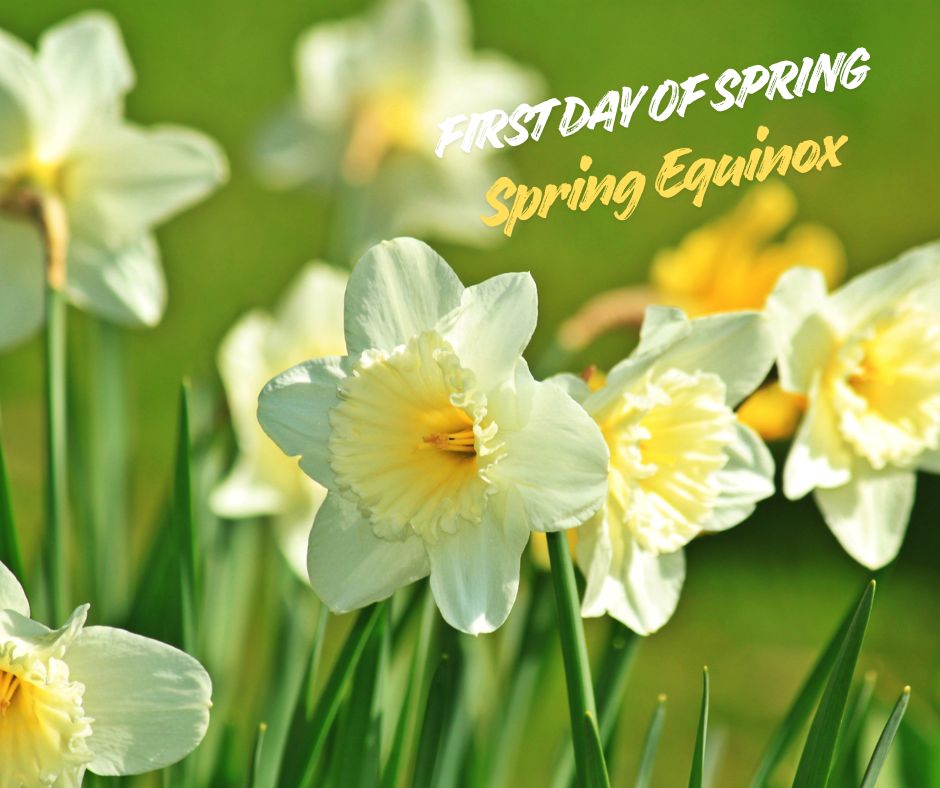
The first day of spring 2026 falls on Friday, March 20, 2026, at 10:46 AM EDT (14:46 UTC). This is the vernal equinox — the astronomical moment when the sun crosses the celestial equator moving northward, marking the official start of spring in the Northern Hemisphere.
There are, however, two valid and distinct answers to when spring begins:
- Meteorological first day of spring 2026: Sunday, March 1, 2026
- Astronomical first day of spring 2026 (vernal equinox): Friday, March 20, 2026, at 10:46 AM EDT
Most people have encountered both dates in different sources and found them conflicting.
They are not. They are measurements from two different systems — one used by climatologists, one by astronomers.
Both are correct. The distinction between them is one of the most searched and least clearly explained facts in all of seasonal science.
This guide covers the science of the vernal equinox, the meteorological vs. astronomical distinction, global cultural traditions, the equilux phenomenon, the egg-balancing myth, activities for families and spiritual practitioners, and the unique 2026 astronomical context — including the planetary parade visible near the equinox and the convergence of Nowruz, the spring equinox, and the International Day of Happiness on the same calendar date.
Table of Contents
When Is the First Day of Spring 2026?
The first day of spring 2026 is Friday, March 20, 2026, astronomically, and Sunday, March 1, 2026, meteorologically. Both answers are factually accurate; each belongs to a different definitional system.
The First Day of Spring 2026 — Quick Reference
| Definition | Date | Time | Used By |
|---|---|---|---|
| Meteorological Spring Start | Sunday, March 1, 2026 | 12:00 AM (start of day) | NOAA, Met Office, weather services |
| Astronomical Spring Start (Vernal Equinox) | Friday, March 20, 2026 | 10:46 AM EDT / 14:46 UTC | Astronomers, NASA, US Naval Observatory |
| Daylight Saving Time Begins (USA) | Sunday, March 8, 2026 | 2:00 AM local time | US, Canada (most regions) |
| Spring Equinox Day of Week | Friday | — | — |
H4: What Time Is the First Day of Spring 2026 in My Time Zone?
The spring equinox moment on Friday, March 20, 2026, occurs simultaneously worldwide. The local clock time differs by region:
| Time Zone | Local Time on March 20, 2026 |
|---|---|
| EDT (New York, Washington DC) | 10:46 AM |
| CDT (Chicago, Dallas) | 9:46 AM |
| MDT (Denver) | 8:46 AM |
| PDT (Los Angeles, Seattle) | 7:46 AM |
| UTC (Universal) | 14:46 |
| BST (London, after March 30 clock change) | 3:46 PM |
| CET (Paris, Berlin) | 4:46 PM |
| IST (Mumbai, New Delhi) | 8:16 PM |
| AEDT (Sydney, Melbourne) | 1:46 AM, March 21 |
| NZDT (Auckland) | 3:46 AM, March 21 |
Note: The UK and most of Europe shift clocks forward on Sunday, March 29, 2026 — 9 days after the equinox. US Daylight Saving Time begins on Sunday, March 8, 2026 — 12 days before the equinox.
Meteorological Spring vs. Astronomical Spring — The Full Explanation
The core difference between meteorological and astronomical spring is the system used to define it: fixed calendar dates based on temperature cycles (meteorological) vs. Earth’s orbital position relative to the sun (astronomical).
This distinction explains why a weather forecast on March 5 refers to “spring” while an astronomy article on the same day says spring has not yet begun.
What Is Meteorological Spring?
Meteorological spring runs from March 1 through May 31 every year without variation. Climatologists and weather services, including NOAA and the UK Met Office, developed this definition to standardize climate data comparison across years.
Because meteorological seasons use fixed calendar dates, temperature and precipitation records from March 2026 can be compared directly to March 1986 without adjusting for equinox drift.
The system divides the year into four tidy 3-month blocks:
- Spring: March 1 – May 31
- Summer: June 1 – August 31
- Autumn: September 1 – November 30
- Winter: December 1 – February 28/29
H3: What Is Astronomical Spring?
Astronomical spring is defined by Earth’s position in its orbit around the sun. It begins at the vernal equinox — the precise moment the sun crosses the celestial equator heading northward — and ends at the summer solstice. In 2026, astronomical spring runs from Friday, March 20, 2026, through the summer solstice on Saturday, June 20, 2026.
Unlike meteorological spring, the astronomical start date shifts each year slightly between March 19 and March 21, driven by the 365.25-day solar year and leap year corrections.
Comparison Table — Meteorological vs. Astronomical Spring 2026
| Feature | Meteorological Spring 2026 | Astronomical Spring 2026 |
|---|---|---|
| Start Date | Sunday, March 1, 2026 | Friday, March 20, 2026 |
| End Date | Sunday, May 31, 2026 | Saturday, June 20, 2026 |
| Duration | 92 days | 92 days (approx.) |
| Start Time | Fixed (midnight, March 1) | 10:46 AM EDT, March 20 |
| Varies by Year? | No — always March 1 | Yes — between March 19–21 |
| Used By | NOAA, Met Office, BBC Weather | NASA, US Naval Observatory, astronomers |
| Basis | Temperature and calendar alignment | Earth’s orbital position |
| Primary Audience | Weather reporting, climate science | Astronomy, calendar systems |
Neither definition is more accurate than the other. They measure different things. Meteorological spring is designed for consistency in climate analysis. Astronomical spring marks a precise celestial event.
What Is the Vernal Equinox? The Science Behind the First Day of Spring
The vernal equinox is the moment when the sun crosses the celestial equator — the imaginary line in the sky directly above Earth’s equator — moving from south to north. On this date, the sun rises almost exactly due east and sets almost exactly due west at every location on Earth.
Earth’s Axial Tilt and Why Seasons Exist
Earth’s seasons result from a 23.5-degree axial tilt relative to its orbital plane (the ecliptic). This tilt causes the Northern Hemisphere to receive more direct solar radiation in summer and less in winter — not because Earth is closer to or farther from the sun, but because the angle of incoming sunlight changes.
At the vernal equinox, neither hemisphere is tilted toward the sun. The sun’s rays strike the equator perpendicularly. This is the transitional balance point between the extremes of the solstices.
What Happens Astronomically on Friday, March 20, 2026?
At 10:46 AM EDT on Friday, March 20, 2026, the center of the sun crosses the celestial equator at the First Point of Aries — the intersection of the ecliptic and the celestial equator. This point is used as the zero-hour reference in the celestial coordinate system.
Key observable effects on March 20, 2026:
- The sun rises within approximately 1–2 minutes of due east at most latitudes
- The sun sets within approximately 1–2 minutes of due west
- Solar noon occurs at its transitional position between winter and summer arc heights
- Daytime and nighttime are close to — but not exactly — equal in length
Equilux vs. Equinox — Why Day and Night Are Not Exactly Equal on the Spring Equinox
The equilux, not the equinox, is the day when sunrise to sunset lasts exactly 12 hours. The equilux typically occurs 3–4 days before the vernal equinox, around March 16 or 17, depending on latitude.
Two physical phenomena cause this offset:
1. Atmospheric Refraction Earth’s atmosphere bends sunlight as it passes through layers of varying density. When the sun’s geometric center is still approximately 0.57 degrees below the horizon, refraction curves its light enough to make the sun visible. This effect adds roughly 6–8 minutes of apparent daylight per day.
2. The Sun’s Disk Diameter Sunrise is defined as the moment the upper limb (top edge) of the sun appears above the horizon, not the center. Sunset is defined as the moment the upper limb disappears below the horizon. Because the sun’s apparent diameter is approximately 0.53 degrees, this definition adds several minutes of observable light beyond the geometric calculation.
The combined result: on the day of the vernal equinox, most Northern Hemisphere locations experience slightly more than 12 hours of daylight. The actual equal-light day has already passed.
| Latitude | Approximate Equilux Date (2026) |
|---|---|
| 60°N (Oslo, Helsinki, Anchorage) | Around March 14–15, 2026 |
| 51°N (London, Warsaw) | Around March 16, 2026 |
| 41°N (New York, Madrid) | Around March 17, 2026 |
| 35°N (Los Angeles, Tokyo) | Around March 17–18, 2026 |
| 0° (Equator) | Not applicable — near-equal days year-round |
The equilux concept is absent from almost all mainstream spring equinox content. The distinction provides genuine information gain and is verifiable through the US Naval Observatory sunrise/sunset tables.
Why Does the First Day of Spring Change Year to Year?
The vernal equinox shifts between March 19 and March 21 each year because the solar year is 365.2422 days long — not exactly 365.
The Gregorian calendar uses leap years (adding February 29 every 4 years, with century-year corrections) to compensate, but the alignment is never perfect. Each year, the equinox drifts slightly. In 2026, it falls on March 20.
| Year | Vernal Equinox Date | Time (UTC) |
|---|---|---|
| 2024 | Tuesday, March 19, 2024 | 03:06 |
| 2025 | Thursday, March 20, 2025 | 09:01 |
| 2026 | Friday, March 20, 2026 | 14:46 |
| 2027 | Saturday, March 20, 2027 | 20:25 |
| 2028 | Monday, March 20, 2028 | 02:17 |
Over centuries, the longer phenomenon of axial precession — discovered by the Greek astronomer Hipparchus (c. 190–120 BC) — causes the equinox to drift through the zodiac over a 26,000-year cycle. This is why the First Point of Aries, once aligned with the constellation Aries, now points toward Pisces.
The History and Origins of the Spring Equinox
Human civilizations have tracked the spring equinox for at least 5,000 years, using it as a calendrical anchor for agriculture, religion, and governance.
Ancient Monuments Aligned With the Spring Equinox
Multiple ancient architectural sites demonstrate precision alignment with the vernal equinox:
Chichen Itza, Mexico (Pyramid of Kukulcan / El Castillo): The pyramid produces a visually striking phenomenon on the spring and autumn equinoxes. The setting sun casts a series of triangular shadows on the northern staircase that create the illusion of a feathered serpent descending toward the ground. The effect lasts approximately 3.5 hours and is precisely engineered into the pyramid’s geometry. An estimated 40,000–50,000 visitors attend the spring equinox event annually.
Angkor Wat, Cambodia: The main temple at Angkor Wat aligns with the spring equinox sunrise. An observer standing at the western entrance sees the sun rise directly over the central tower on the equinox morning.
Stonehenge, Wiltshire, England: Stonehenge is primarily known for its summer solstice alignment, but the monument also aligns with the equinox axis. Thousands of Druids, pagans, and members of the public gather at Stonehenge each year to observe the spring equinox sunrise. English Heritage typically allows open public access to the stones at dawn on the equinox. Attendance in recent years has ranged from 5,000 to 8,000 people.
Newgrange, County Meath, Ireland: Newgrange is engineered for the winter solstice sunrise, but the site is part of a broader Megalithic astronomical complex that tracked seasonal cycles, including equinoxes.
The Council of Nicaea and the Ecclesiastical Spring Equinox
In AD 325, the Council of Nicaea fixed the ecclesiastical spring equinox at March 21 for the purpose of calculating Easter. The formula for Easter — the first Sunday after the first full moon following the ecclesiastical equinox — remains in use today by Western Christian churches, using March 21 as the fixed reference even when the astronomical equinox falls on March 19 or 20.
This is why March 21 appears in many historical and religious texts as “the first day of spring,” and why Easter dates sometimes appear to drift from the actual lunar-equinox relationship.
In 2026, Easter falls on Sunday, April 5, 2026 — calculated by this ecclesiastical system.
Hipparchus and the Precession of the Equinoxes
Hipparchus of Nicaea (c. 190–120 BC) is credited with discovering the precession of the equinoxes — the slow gyroscopic wobble of Earth’s axis that causes the equinox to shift approximately 1 degree every 72 years along the ecliptic.
He made this discovery by comparing his own star catalogue with those of earlier Babylonian astronomers and detecting a consistent displacement. The full precessional cycle takes approximately 25,772 years to complete.
Global Traditions for the First Day of Spring — Nowruz, Ostara, and Beyond
The spring equinox is observed as a culturally significant event by more than 500 million people across at least a dozen distinct traditions worldwide.
Nowruz 2026 — Persian New Year on the Vernal Equinox
Nowruz (meaning “new day” in Persian) falls on Friday, March 20, 2026 — the same date as the vernal equinox. This convergence is not coincidental: Nowruz is explicitly tied to the astronomical equinox and has been observed on this date for over 3,000 years.
Nowruz is the official New Year celebration in Iran, Afghanistan, Azerbaijan, Kazakhstan, Kyrgyzstan, Tajikistan, Turkmenistan, Uzbekistan, and among significant diaspora communities globally. The United Nations recognized Nowruz as an International Day in 2010 (UN Resolution A/RES/64/253). An estimated 300 million people observe Nowruz worldwide.
Core Nowruz traditions:
The Haft-Seen table is the central ritual arrangement, consisting of seven items that begin with the Persian letter “S” (sin):
| Haft-Seen Item | Persian Name | Symbolic Meaning |
|---|---|---|
| Sprouted wheat or lentil | Sabzeh | Rebirth and renewal |
| Dried oleaster fruit | Senjed | Love and affection |
| Garlic | Sir | Health and medicine |
| Apple | Sib | Beauty and health |
| Sumac | Somaq | Sunrise and patience |
| Vinegar | Serkeh | Wisdom and age |
| Coin | Sekke | Prosperity and wealth |
Additional observances include thorough spring cleaning before Nowruz (called khane tekani), family visits on the 13 days of the celebration, jumping over bonfires on the eve (Chaharshanbe Suri), and consuming sabzi polo mahi — herb rice with fish — as the ceremonial New Year meal.
In 2026, Nowruz coincides with the vernal equinox and the International Day of Happiness (designated March 20 by the UN in 2012). This triple convergence — Nowruz, the vernal equinox, and the International Day of Happiness — all falling on Friday, March 20, 2026 — is a rare calendrical alignment that generates significant content and social media interest.
Ostara 2026 — The Pagan and Wiccan Spring Equinox
Ostara is one of eight sabbats on the Wiccan Wheel of the Year, falling on the spring equinox — Friday, March 20, 2026. It is named for Eostre, a Germanic spring goddess documented by the Venerable Bede (673–735 AD) in De Temporum Ratione. Modern scholarly consensus holds that Eostre was a genuine pre-Christian deity associated with spring, dawn, and fertility, though the scope of her historical cult is debated.
Ostara is notable as the etymological source for both the word “Easter” and (through the Old English Eosturmonath) the month of April in some linguistic traditions.
Ostara observances and practices in 2026:
- Creating a spring altar with seasonal objects: eggs, early spring flowers (daffodils, tulips, crocuses), hare figures, candles in yellow, green, and pale pink
- Planting seeds as a symbolic act of intention-setting
- Performing egg decoration as a fertility and rebirth ritual
- Conducting a spring equinox ritual incorporating the balance of light and dark
- Observing sunrise on March 20 to honor the return of solar energy
Crystals commonly used in Ostara practice: citrine (joy), green aventurine (growth and luck), rose quartz (compassion), clear quartz (amplification), and amazonite (hope and renewal).
Ostara vs. Easter — The Relationship Between the Spring Equinox and Christianity
Ostara and Easter share symbolic elements — eggs, hares, and the timing of spring renewal — but their theological origins are distinct. Easter is calculated from the ecclesiastical equinox (March 21) and the Paschal full moon, not from pagan sources directly. The egg and hare symbolism that became associated with Easter in Northern European cultures likely absorbed pre-existing spring iconography over centuries of Christian-pagan cultural contact. In 2026, Easter falls on Sunday, April 5, 2026, sixteen days after the vernal equinox.
Shunbun no Hi — Japan’s Spring Equinox National Holiday
Japan observes the spring equinox as a national public holiday called Shunbun no Hi (春分の日), which falls on Friday, March 20, 2026. This fact is almost entirely absent from Western English-language content despite being one of the few countries in the world to designate the astronomical equinox as a public holiday.
Shunbun no Hi traditions include:
- Family visits to ancestral graves (ohakamairi), often with offerings of flowers and incense
- Buddhist Higan ceremonies, observed for 7 days centered on the equinox, focused on reflection and moving from the realm of suffering toward enlightenment
- Planning for cherry blossom (sakura) season, which typically begins in late March or early April in Tokyo and runs northward through May
- Schools and government offices close for the national holiday
The spring Higan observance connects the equinox to the Buddhist concept of the “other shore” (higan) — the equinox is seen as a time when the spirit world and the living world are closest, given the balance of light and dark.
H3: Stonehenge Spring Equinox 2026 Gathering
Stonehenge hosts an open-access gathering at the spring equinox sunrise each year. In recent years, between 5,000 and 8,000 people have attended. English Heritage, which manages the site, typically opens the monument for public access beginning around 5:00 AM on the equinox morning, allowing visitors to stand among the stones — access not available during regular daytime visiting hours.
Sunrise on Friday, March 20, 2026, at Stonehenge occurs at approximately 6:12 AM GMT (noting that the UK has not yet shifted to BST at this date — BST begins March 29, 2026). The Heel Stone and the Avenue align with the approximate direction of the equinox sunrise, though Stonehenge’s primary astronomical alignment is the summer solstice.
Chichen Itza Spring Equinox 2026 — The Kukulcan Serpent
The Pyramid of Kukulcan (El Castillo) at Chichen Itza, Mexico, produces a visual phenomenon on the spring equinox in which the play of light and shadow creates the appearance of a feathered serpent descending the pyramid’s northern staircase. The effect is produced by seven triangular shadows cast by the pyramid’s nine terraced platforms, which align with the carved serpent heads at the base of the staircase.
The phenomenon begins approximately 3 hours before sunset and lasts roughly 3.5 hours. It also occurs on the autumn equinox. The site receives an estimated 40,000–50,000 visitors specifically for the spring equinox event. Tickets to Chichen Itza for March 20, 2026, should be purchased well in advance through Mexico’s Instituto Nacional de Antropología e Historia (INAH).
The Spiritual Meaning of the Spring Equinox 2026
The spring equinox is interpreted across traditions as a threshold moment representing balance, renewal, and the restoration of light after winter’s diminishment of daylight.
Universal Symbolism Across Traditions
The spiritual symbolism of the spring equinox converges across otherwise distinct traditions:
| Theme | Tradition | Expression |
|---|---|---|
| Rebirth after death | Christianity | Easter, resurrection symbolism |
| New year and renewal | Persian (Nowruz) | Haft-Seen, spring cleaning, new clothes |
| Balance of opposing forces | Wiccan/Pagan (Ostara) | Light and dark in equilibrium |
| Ancestors and the threshold | Japanese Buddhism (Higan) | Grave visits, equinox as liminal time |
| Agricultural fertility | Ancient Near East | Temple alignments, planting festivals |
| Personal intention-setting | Modern wellness culture | Journaling, ritual seed planting |
Spring Equinox as a Natural New Year — Setting Intentions for 2026
Multiple cultural systems have treated the spring equinox, rather than January 1, as the natural start of a new annual cycle — the point when the natural world itself begins a new phase of growth. The Persian calendar (Nowruz), Celtic seasonal systems, and the Julian calendar (which marked March 25 as the New Year in England until 1752) all reflect this orientation.
For those who practice intention-setting or personal goal work aligned with natural cycles, the spring equinox on Friday, March 20, 2026, offers a symbolically grounded start point — 80 days into the Gregorian calendar year, but the first day of increasing growth in the natural world.
Spring Equinox Journal Prompts for 2026
These prompts are designed for equinox reflection and forward intention-setting:
- What did I allow to lie dormant through winter that I am ready to bring into active growth?
- What does balance look like for me in this season — between rest and effort, giving and receiving?
- What single seed (project, habit, relationship, practice) do I want to nurture from the equinox to the summer solstice on Saturday, June 20, 2026?
- What from the previous year am I ready to release before the new growth begins?
- Where in my life has the light been returning that I have not yet acknowledged?
Spring Equinox Tarot Spread for 2026
A 5-card equinox spread for personal reflection:
| Card Position | Question |
|---|---|
| 1 | What am I releasing from winter? |
| 2 | What is newly growing in me? |
| 3 | What intention should I plant at the equinox? |
| 4 | What will support my growth this spring? |
| 5 | What will bloom by the summer solstice (June 20, 2026)? |
Why Does It Snow on the First Day of Spring? The Science of Seasonal Lag
Snow on March 20 occurs because the astronomical equinox marks a change in solar geometry, not a change in atmospheric temperature, and the atmosphere responds to solar input with a delay of 4–6 weeks.
This delay is called seasonal lag (also referred to as thermal lag). Air temperature, soil temperature, and ocean surface temperature all reach their minimum values weeks after the winter solstice — typically in late January or early February in the Northern Hemisphere. Similarly, these temperatures continue rising weeks after the summer solstice, which is why August is warmer than late June in much of North America and Europe.
The spring equinox is the turning point in solar energy input, not the arrival of warmth. March 20 marks the day when the Northern Hemisphere begins receiving more solar energy than the Southern Hemisphere — but the accumulated cold of winter takes weeks to dissipate.
H3: Average March 20 Temperatures by Region
The following averages illustrate how meteorologically “winter-like” the first day of spring typically remains:
| City | Average High on March 20 | Average Low on March 20 |
|---|---|---|
| Chicago, Illinois | 9°C (48°F) | 0°C (32°F) |
| New York, New York | 10°C (50°F) | 2°C (35°F) |
| Minneapolis, Minnesota | 5°C (41°F) | -5°C (23°F) |
| Toronto, Ontario | 6°C (43°F) | -1°C (30°F) |
| London, England | 11°C (52°F) | 4°C (39°F) |
| Moscow, Russia | 2°C (36°F) | -5°C (23°F) |
| Seoul, South Korea | 11°C (52°F) | 2°C (36°F) |
In Minnesota, Wisconsin, the Canadian Prairies, Scandinavia, and Russia, measurable snowfall on March 20 is climatologically normal rather than exceptional.
The 2026 Planetary Parade Near the First Day of Spring
In early 2026, multiple planets are visible in the night and early-morning sky during the period surrounding the spring equinox, creating an unusually rich sky-watching window.
Around the time of the Friday, March 20, 2026, equinox, the following planets are observable under clear, dark conditions:
| Planet | Visibility Window | Naked Eye or Instrument |
|---|---|---|
| Venus | Evening sky, western horizon after sunset | Naked eye (very bright) |
| Jupiter | Evening sky, western quadrant | Naked eye |
| Mars | Evening sky | Naked eye |
| Saturn | Pre-dawn eastern sky | Naked eye |
| Mercury | Low on western horizon just after sunset | Naked eye (briefly, near inferior conjunction timing) |
| Uranus | Evening sky, near Venus | Binoculars or small telescope |
| Neptune | Pre-dawn eastern sky | Telescope required |
The spring equinox sunrise itself is a reliable sky-watching event: on March 20, 2026, the sun rises within 1–2 minutes of due east at most Northern Hemisphere locations, providing a verifiable compass alignment observable with the naked eye.
The Lyrid Meteor Shower — the first major meteor shower of astronomical spring — peaks annually around April 22–23. In 2026, the Lyrids peak on April 22–23, approximately 33 days after the equinox. The shower typically produces 15–20 meteors per hour under dark sky conditions. The Lyrids originate from debris left by Comet Thatcher (C/1861 G1).
Can You Really Balance an Egg on the First Day of Spring? The Myth Debunked
The claim that raw eggs can be balanced on their ends only on the spring equinox is a myth. Eggs can be balanced on their ends on any day of the year, given a level surface and sufficient patience.
The spring equinox produces no measurable change in gravity, magnetic fields, or any other physical force that would affect an egg’s ability to stand upright.
The Physics of Egg Balancing
Balancing a raw egg on its larger end requires:
- A flat, level surface
- An egg with a sufficiently rough shell (minor texture variations create micro-contact points that resist slipping)
- Patience: the process typically takes 1–10 minutes of careful adjustment
The yolk inside a raw egg sits slightly below the center due to its density. This creates a low center of gravity that, under the right conditions, makes vertical balance achievable. None of these physical properties changes on March 20.
Origin of the Egg Balancing Myth
The myth appears to have originated in the United States in 1945, when Life magazine published a story about a Chinese tradition of standing eggs on their ends during the spring equinox as a sign of good luck. The article was interpreted as a factual scientific claim — that the equinox’s gravitational alignment made egg balancing possible — and spread into popular culture.
The claim was extensively debunked beginning with scientific journalists in the 1980s and 1990s, including in the New York Times (March 20, 1984). The myth persists despite approximately 40 years of documented debunking.
First Day of Spring 2026 — Activities, Traditions, and Ideas
The most widely observed first day of spring activities include sunrise observation, nature walks, seed planting, spring cleaning, and family crafts — spanning secular, spiritual, cultural, and educational contexts.
How to Observe the Spring Equinox on March 20, 2026
The equinox moment on Friday, March 20, 2026, at 10:46 AM EDT offers concrete observational opportunities:
- Sunrise observation: At most Northern Hemisphere locations on March 20, 2026, the sun rises within 1–2 minutes of due east. This is the most reliable visible marker of the equinox — a compass placed outdoors will confirm the sun’s position at sunrise.
- Shadow tracking at solar noon: At solar noon on March 20, a vertical object casts its shortest shadow of the season to date, pointing directly north (in the Northern Hemisphere). The length of the noon shadow on March 20 is intermediate between the long winter-solstice shadow and the short summer-solstice shadow.
- Equinox moment acknowledgment: 10:46 AM EDT on March 20, 2026.
First Day of Spring Activities for Kids
First Day of Spring Crafts for Toddlers and Preschoolers
The following crafts require minimal materials and are appropriate for ages 2–5:
- Paper plate spring sun: Yellow paint on a paper plate, construction paper rays attached around the rim
- Handprint butterfly: Two handprint shapes (painted palms), mirrored and joined at the thumbs
- Tissue paper flowers: Layered tissue paper squares, bunched and secured with pipe cleaners
- Egg carton caterpillar: Individual egg carton cups painted in sequence, connected with glue, with pipe cleaner antennae
- Footprint duck: Yellow paint footprint on paper with an orange beak added
Spring Equinox Science Activities for Kids (Ages 5–12)
- Egg balancing experiment: Attempt to balance a raw egg on the spring equinox and again on any other day. Compare results. Observe that there is no difference and explain why using the myth-debunking information above.
- Shadow tracking chart: At 9:00 AM, 12:00 PM, and 3:00 PM on March 20, measure the length of a stick’s shadow. Compare to measurements from the same stick on the winter solstice (December 21, 2025) if available.
- Seed-to-sprout journal: Plant two identical seeds on March 20, 2026 — one in a sunny window and one in a dark location. Track growth daily for 2 weeks. This teaches both biology and the role of light.
- Equinox vs. equilux comparison: Using a sunrise/sunset calculator (US Naval Observatory or timeanddate.com), find your city’s sunrise and sunset times on both March 17 (equilux for many US cities) and March 20 (equinox). Compare the actual hours of daylight.
First Day of Spring Activities for Adults
- Attend a local botanical garden’s spring opening event — many US botanical gardens (including the US Botanic Garden in Washington, DC, and the New York Botanical Garden) schedule spring planting events around the equinox
- Conduct a complete khane tekani (spring cleaning) inspired by Nowruz tradition — a full household cleaning before March 20
- Take an equinox sunrise nature walk and observe which spring wildflowers have emerged
- Begin a spring container garden (Botanical Bento — a 2026 trend involving dense, high-yield plantings in small containers)
First Day of Spring 2026 — Gardening Guide
The spring equinox on Friday, March 20, 2026, marks a meaningful horticultural threshold: after this date, day length in the Northern Hemisphere exceeds night length and increases daily, accelerating plant growth responses governed by photoperiodism.
What the Spring Equinox Means for Plant Growth
Many plants are controlled by photoperiodism — growth and flowering responses triggered by day length relative to a threshold, not temperature alone. After March 20, 2026, the Northern Hemisphere experiences progressively longer days. For long-day plants (those that flower when daylight exceeds a critical minimum), the post-equinox period triggers floral development.
Vernalization — the process by which certain spring-flowering plants require a sustained cold period before they can flower — has typically been satisfied by late March for most USDA hardiness zones 5 and above. Tulips, daffodils, hyacinths, and many biennial vegetables require vernalization to bloom.
What to Plant After the Spring Equinox by USDA Hardiness Zone
| USDA Zone | Last Average Frost | What to Sow Outdoors After March 20 | What to Start Indoors March 20 for May Transplant |
|---|---|---|---|
| Zone 4 (Minneapolis, Anchorage) | May 15–31 | Hardy greens (spinach, kale) under cover | Tomatoes, peppers, squash |
| Zone 5 (Chicago, Denver) | May 1–15 | Peas, radishes, spinach, lettuce | Tomatoes, peppers, basil, squash |
| Zone 6 (New York, Kansas City) | April 15–30 | Peas, carrots, beets, Swiss chard | Tomatoes, peppers, cucumbers |
| Zone 7 (Washington DC, Atlanta) | April 1–15 | Lettuce, carrots, beets, herbs | Basil, peppers |
| Zone 8 (Seattle, Dallas) | March 15–31 | Direct sow tomatoes, beans, squash | Most tender annuals |
| Zone 9+ (Los Angeles, Houston) | Frost-free | Most vegetables direct-sow in March | Summer crops already in ground |
Spring Equinox Seed Planting as a Ritual — 2026 Trends
The practice of planting seeds on the spring equinox as a symbolic act appears in Ostara tradition, Nowruz (where sabzeh — sprouted wheat — is grown weeks before the equinox for the Haft-Seen table), and modern wellness culture. The act of placing seeds in soil at the moment of seasonal transition functions as a concrete, embodied form of intention-setting.
2026 spring gardening trends:
- “Lemonading”: Making productive use of existing difficult garden conditions (heavy shade, poor drainage, compacted soil) rather than expensive overhauls — prioritizing native-adapted plants over high-maintenance specimens
- Pollinator corridors: Linking garden beds with uninterrupted nectar-rich plantings to support bee and butterfly migration — native wildflower seed mixes for specific regions are a primary delivery mechanism
- Botanical Bento: Dense, high-yield container gardens in small urban spaces — typically a 12″×12″ to 24″×24″ container with layered plantings: taller edibles at center, trailing herbs at edges, small flowering plants to attract pollinators
- Xeriscaping for spring: Drought-tolerant spring plantings (sedums, native grasses, lavender, salvia) in anticipation of summer water restrictions, increasingly relevant across the American West and Southern Europe
H2: First Day of Spring 2026 — Southern Hemisphere
The first day of spring 2026 in the Southern Hemisphere is Tuesday, September 1, 2026 (meteorological), and Tuesday, September 22, 2026 (astronomical spring equinox).
When the Northern Hemisphere experiences the vernal equinox on March 20, the Southern Hemisphere experiences the autumnal equinox. The seasons are inverted. The September equinox — the same astronomical event as March’s, viewed from the opposite hemisphere — marks spring for Australia, New Zealand, South Africa, Argentina, Chile, and all other Southern Hemisphere nations.
| Southern Hemisphere Spring | Date (2026) |
|---|---|
| Meteorological Spring Start | Tuesday, September 1, 2026 |
| Astronomical Spring Equinox | Tuesday, September 22, 2026 (approx. time: TBC by US Naval Observatory) |
| Spring Equinox Day of Week | Tuesday |
| End of Astronomical Spring (Summer Solstice) | Monday, December 21, 2026 |
Southern Hemisphere readers searching “first day of spring 2026” are frequently receiving Northern Hemisphere-specific results. The March 20 date does not apply to Australia, New Zealand, South Africa, most of South America, or any region south of the equator.
Frequently Asked Questions — First Day of Spring 2026
Is the first day of spring always on March 20?
No. The astronomical first day of spring (vernal equinox) falls on March 19, 20, or 21, depending on the year. In 2026, it is March 20. The meteorological first day of spring is always March 1, regardless of the year.
What time is the spring equinox 2026?
The spring equinox occurs at 10:46 AM EDT (14:46 UTC) on Friday, March 20, 2026. This single moment occurs simultaneously worldwide. Local clock times vary by time zone — 9:46 AM CDT, 7:46 AM PDT, 3:46 PM BST, 8:16 PM IST.
What is the difference between meteorological and astronomical spring?
Meteorological spring is a fixed 3-month period from March 1 through May 31, used by weather services for climate data consistency. Astronomical spring begins at the vernal equinox (March 20, 2026) and ends at the summer solstice (June 20, 2026), and its start date varies slightly each year based on Earth’s orbital position.
Is day and night exactly equal on the spring equinox?
No. The actual day of equal daylight — the equilux — occurs approximately 3–4 days before the vernal equinox for most Northern Hemisphere locations, around March 16–17, 2026. Two phenomena cause this offset: atmospheric refraction bends sunlight below the geometric horizon, adding roughly 6–8 minutes of apparent daylight, and sunrise is defined from the top edge of the sun (not its center), which adds additional light-time beyond the geometric calculation.
What is Nowruz, and does it fall on the spring equinox in 2026?
Yes. Nowruz, the Persian New Year celebrated by approximately 300 million people worldwide, falls on Friday, March 20, 2026 — the same date as the vernal equinox. Nowruz is explicitly tied to the astronomical equinox and has been observed continuously for over 3,000 years. It is recognized by the United Nations as an International Day of celebration.
When is the first day of spring in Australia in 2026?
The first day of spring in Australia is Tuesday, September 1, 2026 (meteorological) or Tuesday, September 22, 2026 (astronomical). The Southern Hemisphere experiences spring when the Northern Hemisphere experiences autumn — the September equinox marks the start of spring south of the equator.
Can you really balance an egg on the spring equinox?
No, at least not in any way the equinox causes. Eggs can be balanced on their ends on any day of the year, given patience and a level surface. The spring equinox produces no change in gravity, magnetic force, or any other physical variable that affects egg stability. The myth originated in a 1945 Life magazine story and has been repeatedly debunked by physicists and science journalists since the 1980s.
Key First Day of Spring 2026 Dates and Facts
| Fact | Detail |
|---|---|
| Meteorological first day of spring 2026 | Sunday, March 1, 2026 |
| Astronomical first day of spring 2026 | Friday, March 20, 2026 |
| Exact equinox time (EDT) | 10:46 AM EDT |
| Exact equinox time (UTC) | 14:46 UTC |
| Day of week | Friday |
| Nowruz 2026 | Friday, March 20, 2026 (same day as equinox) |
| International Day of Happiness 2026 | Friday, March 20, 2026 |
| Easter 2026 | Sunday, April 5, 2026 |
| US Daylight Saving Time begins | Sunday, March 8, 2026 |
| UK / EU clocks change | Sunday, March 29, 2026 |
| Summer Solstice 2026 (end of astronomical spring) | Saturday, June 20, 2026 |
| Lyrid Meteor Shower peak 2026 | Wednesday–Thursday, April 22–23, 2026 |
| Southern Hemisphere spring equinox 2026 | Tuesday, September 22, 2026 |
| Equilux (equal-light day) for 40°N latitude | Around Wednesday, March 17, 2026 |
| Earth’s axial tilt | 23.5 degrees |
| Equinox drift range across years | March 19 – March 21 |